


 This furoshiki can be purchased at: https://www.etsy.com/listing/179480547/antique-japanese-tsutsugaki-indigo?ref=shop_home_active_7
Category Archives: Textiles
Cotton and Hemp Zanshiori
I recently found this very worn zanshi fabric. The warp is hemp and the weft is cotton and hemp. It has a beautiful worn feel simular to antique linen. It has been dyed with indigo, but the natural color variations in the hemp thread also lend to the design. Zanshiori is fabric that has been woven using the threads left over at the ends of numerous bobbins. due to the use of thread fragments the fabric has a random pattern and a varied texture because of the knots used to bind all the threads in the weft together. Zanshi was often woven at the end of a bolt of fabric to make use of any remaining warp.

I have listed some of this zanshi fabric for purchase here: https://www.etsy.com/listing/178807794/antique-handwoven-japanese-zanshi-indigo?ref=shop_home_active_3
Tsutsugaki Furoshiki with Noshi Design
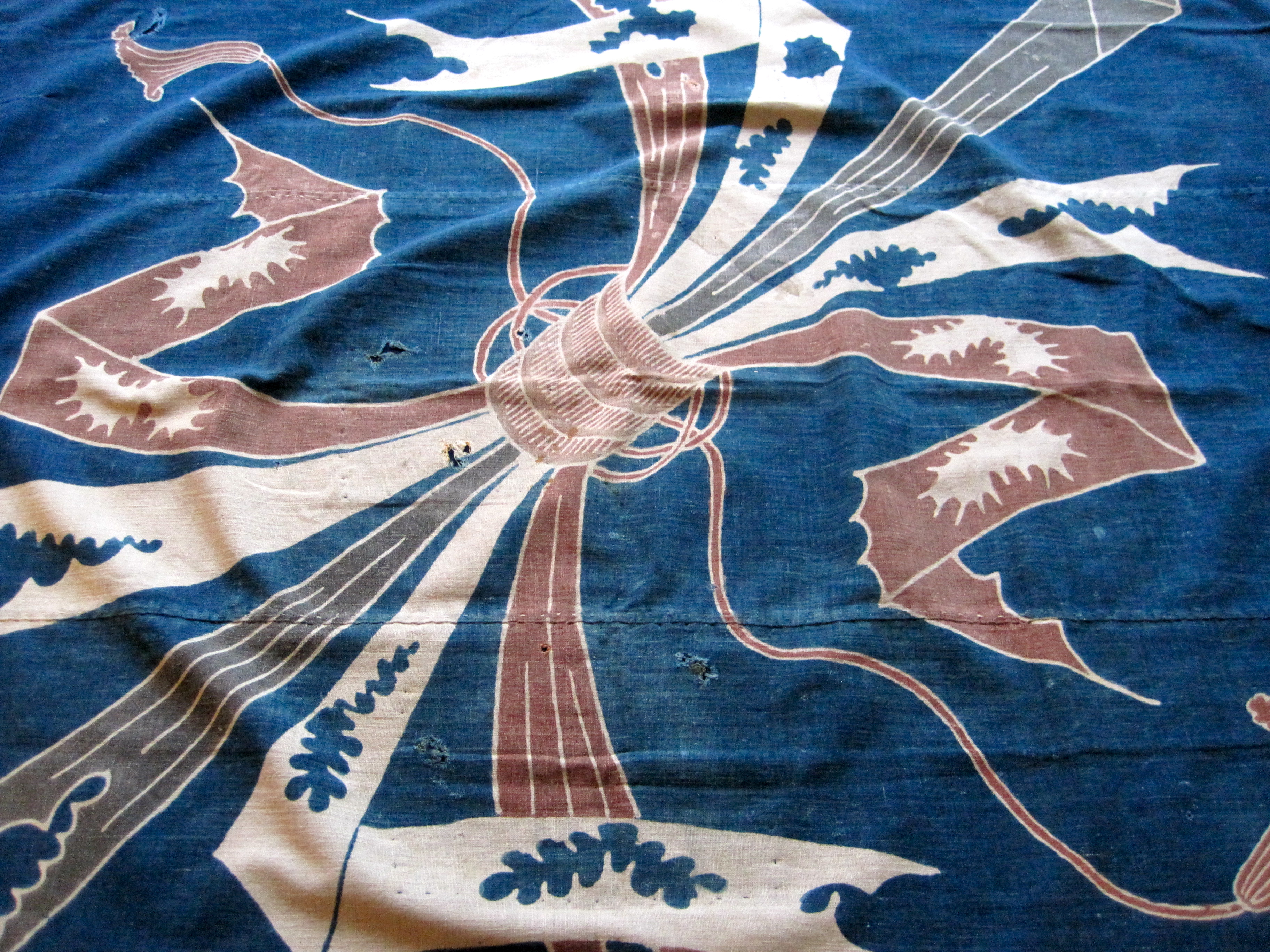
This Meiji era furoshiki depicts a bundle of noshi. These were strips of dried abalone given as gifts in old Japan. Over time the noshi developed into an auspicious design that can be found on many Edo and Meiji era items that were originally meant as gifts. the symbol came to represent a wish for good fortune and prosperity. 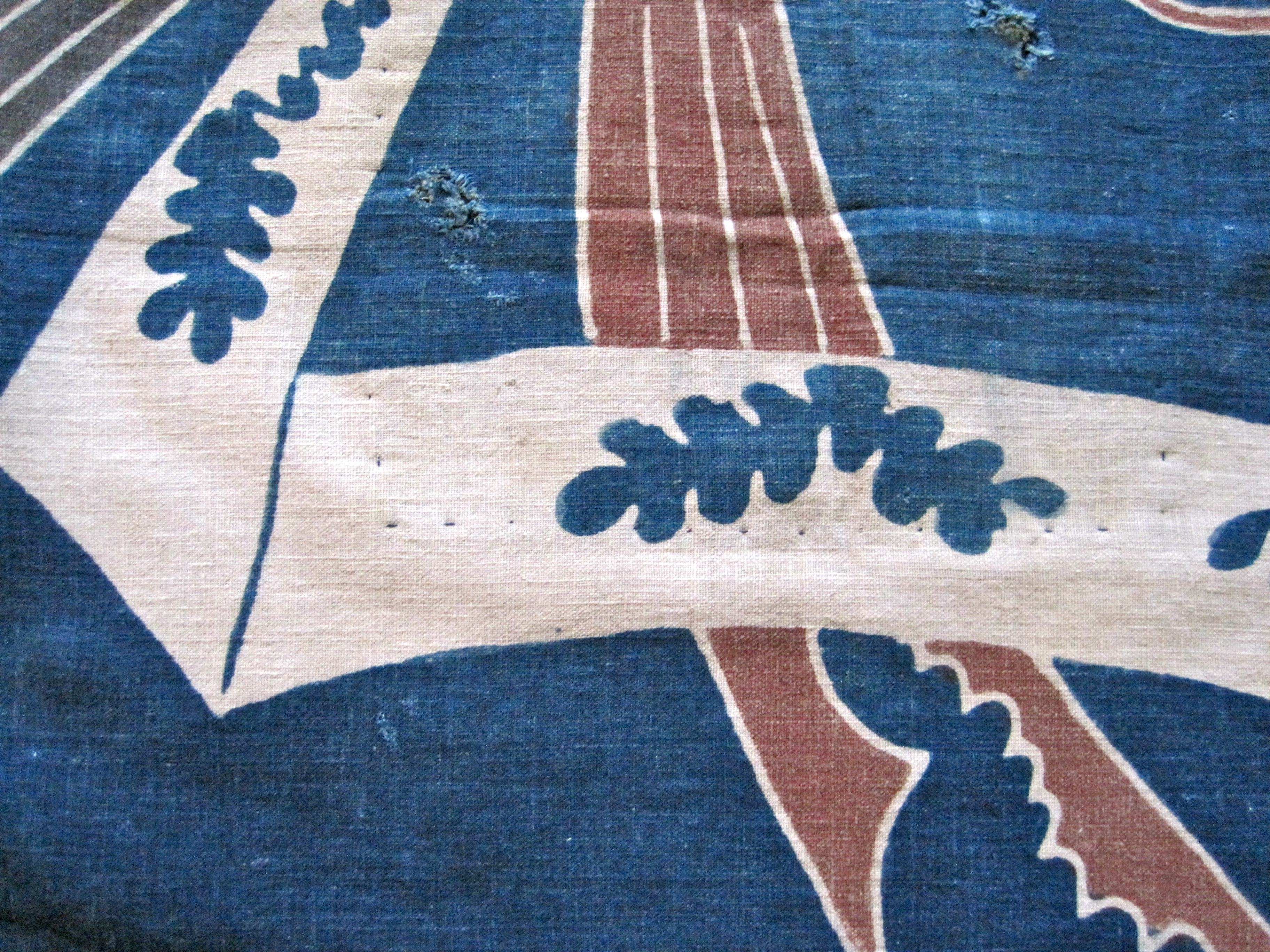
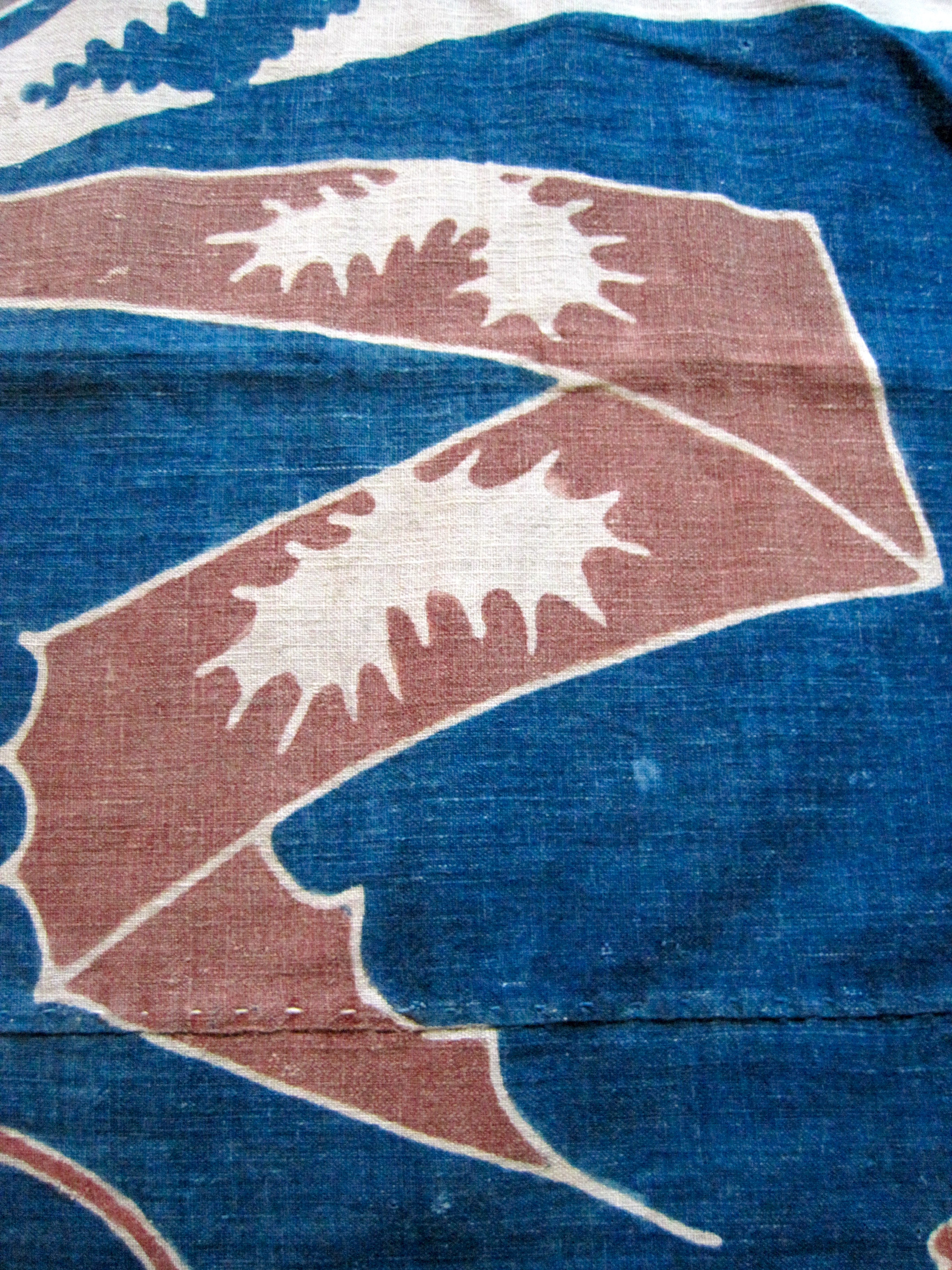
This furoshiki employs indigo, persimmon, and sumi ink dyes. The design was created by using rice paste in a resist technique known as tsutsugaki. I love the way the imperfections in the noshi are represented, I also love the deep indigo background color.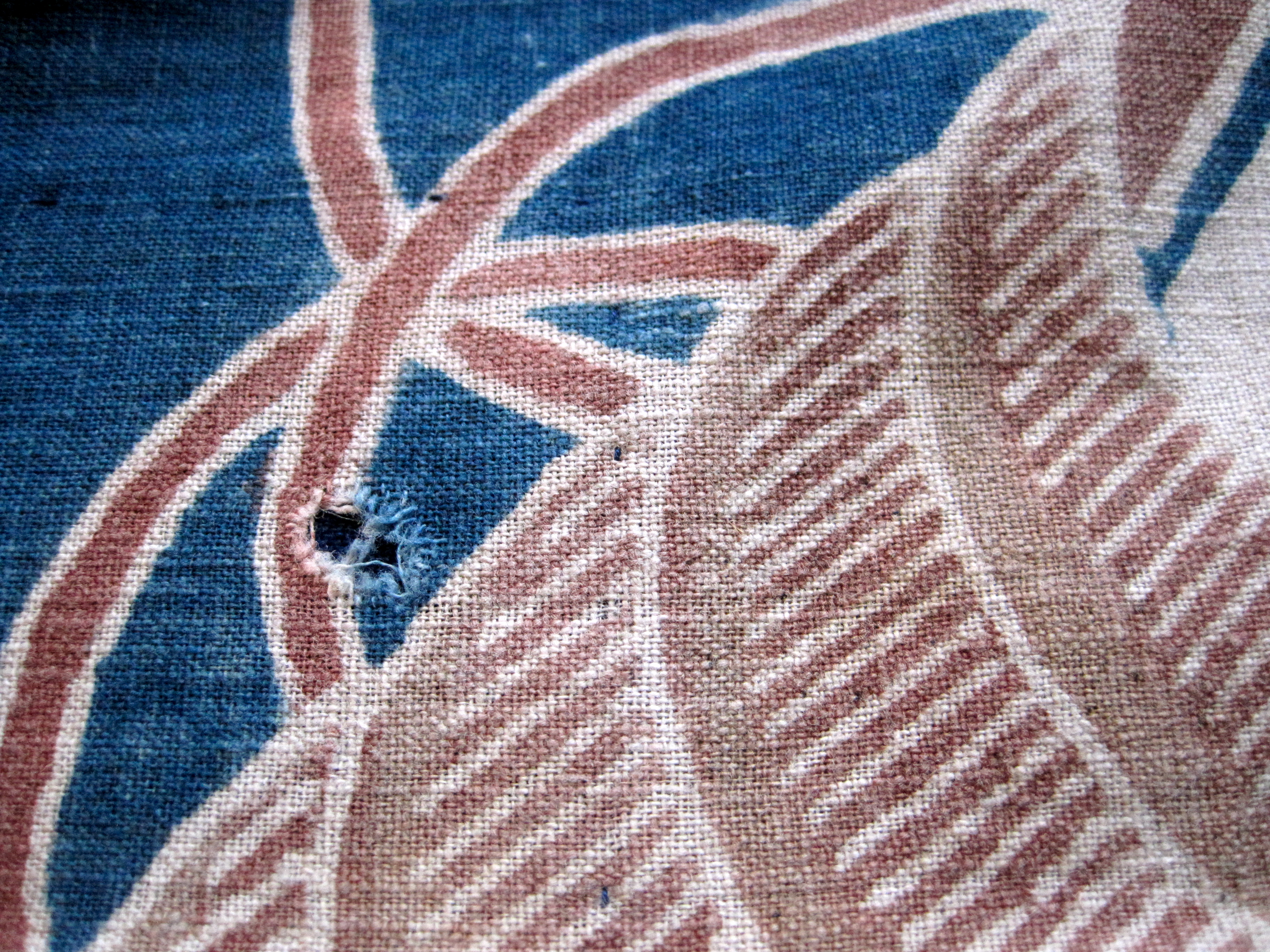
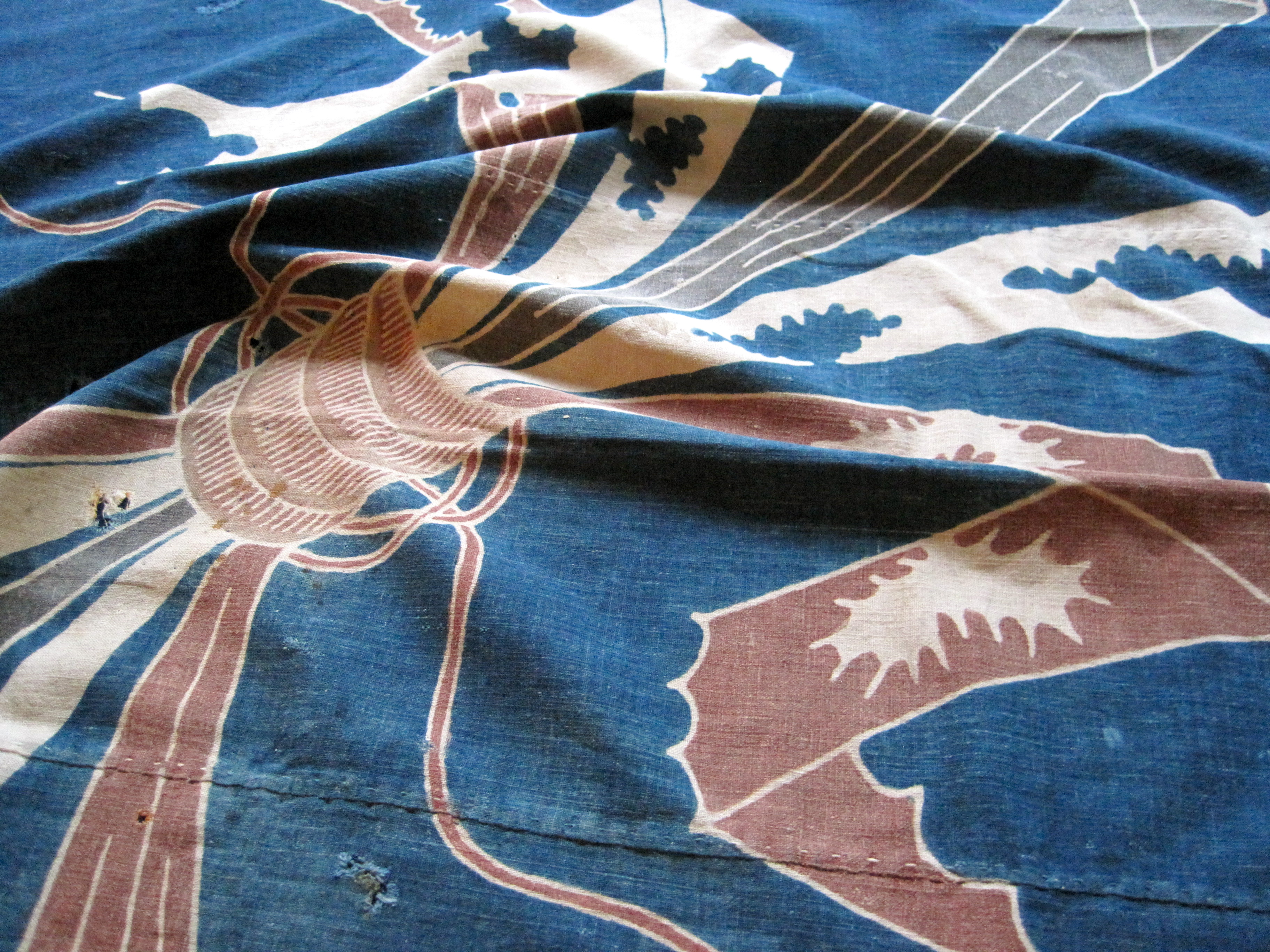
This furoshiki has several big patches which makes me think that it was extra special. I know someone treasured it due to all the work they put into mending it.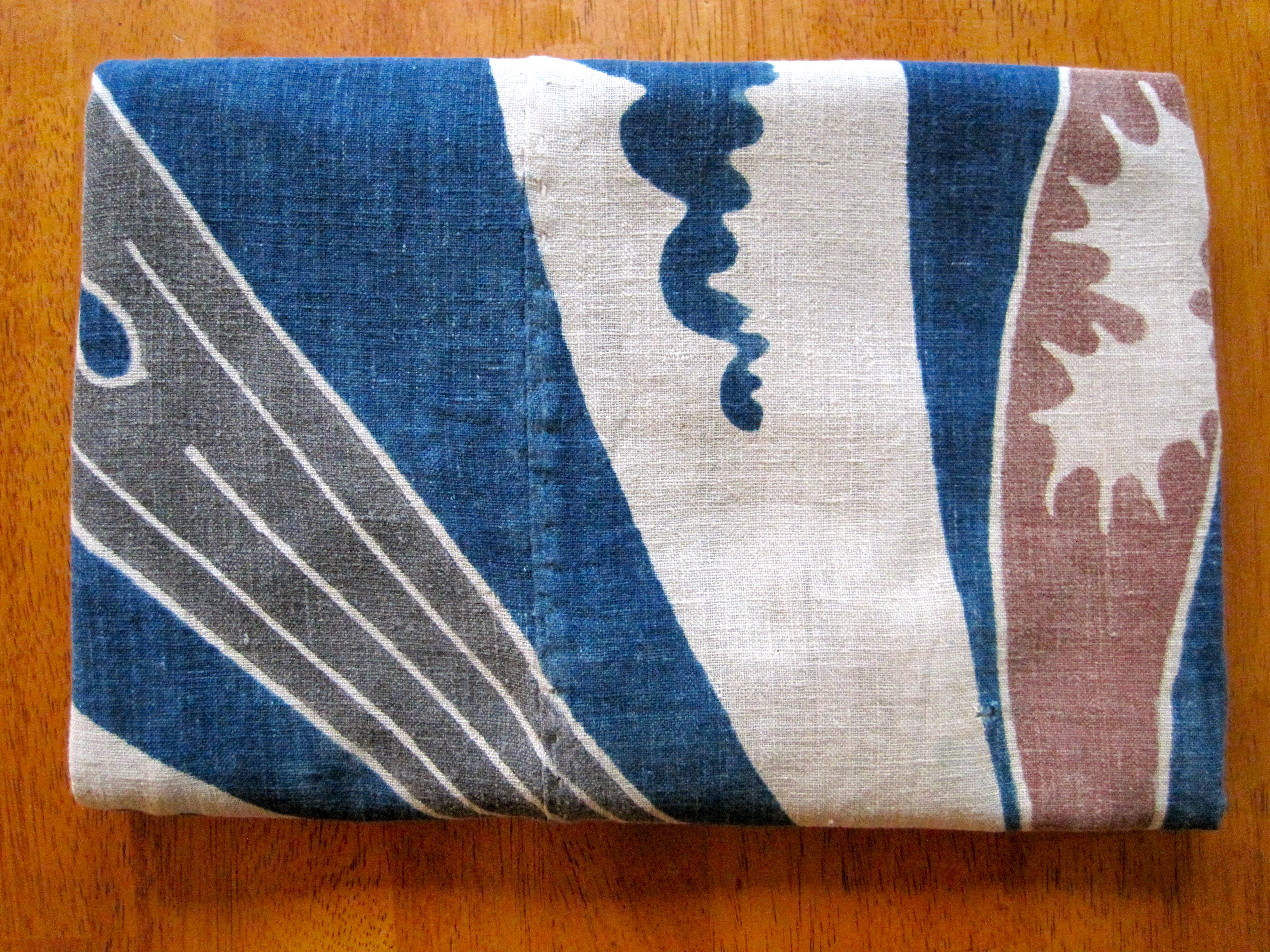
Happy New Year.
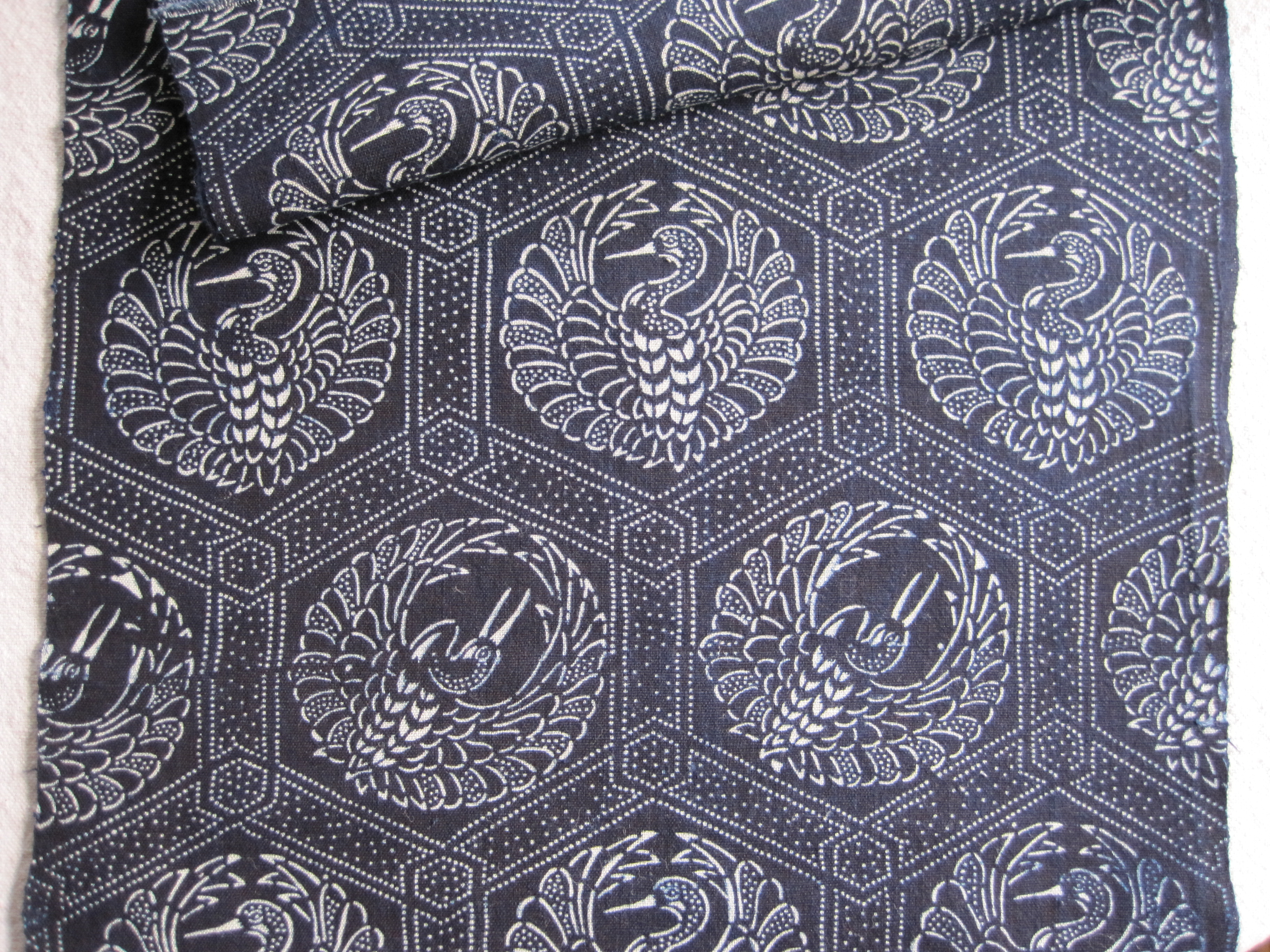
Antique katazome with crane


Meiji era furoshiki with patches

This Meiji era furoshiki or “carrying cloth” was probably once the smallest of a set of three furoshiki that were part of a brides trousseau. The central kamon or “crest” and the kanji on the side have been dyed using a technique known as tsutsugaki. I love the simple design and the naive way the kamon and kanji are rendered. What makes this piece so nice are the beautiful patches and stitches that adorn the back and peek through to the front.
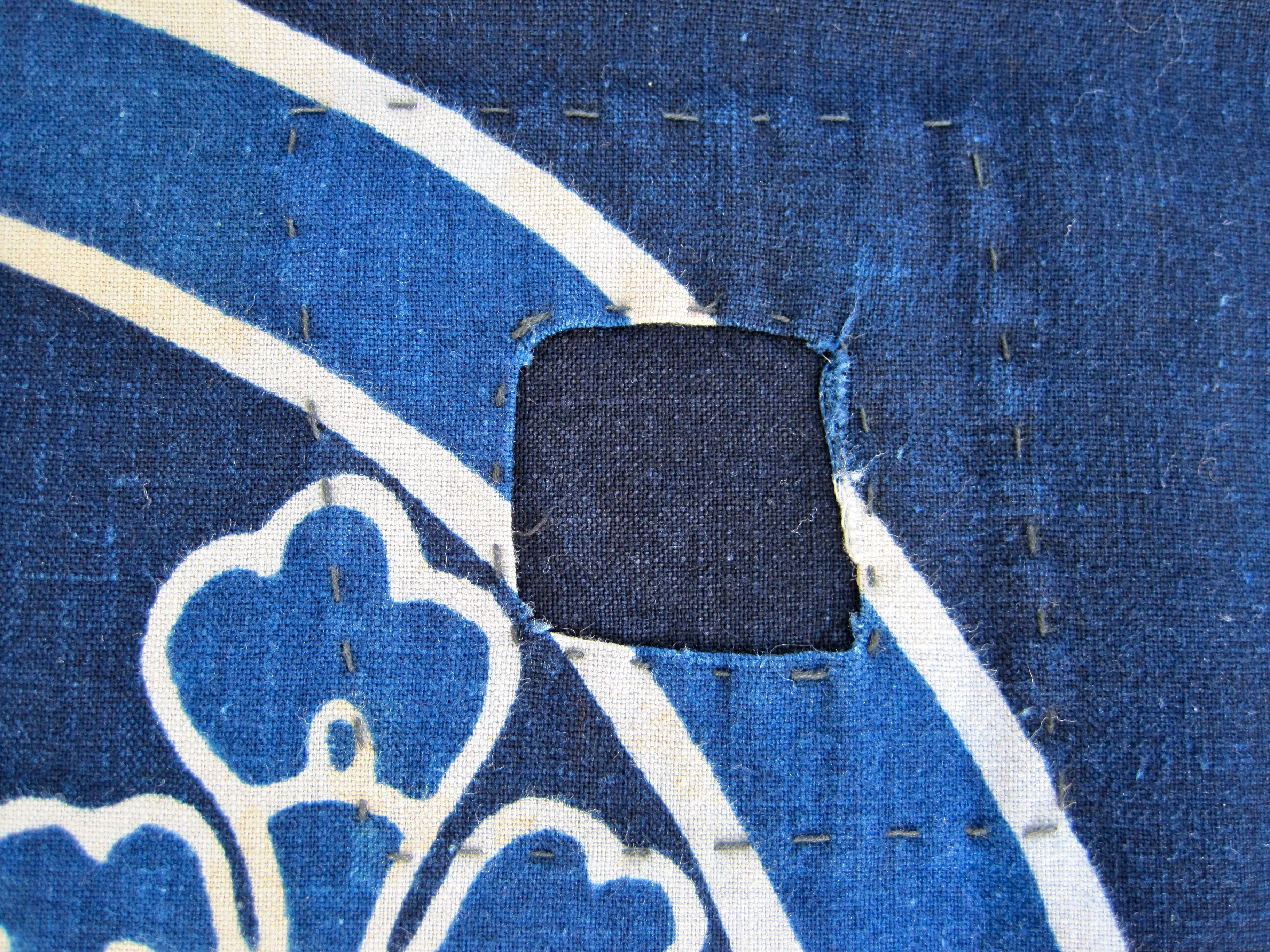


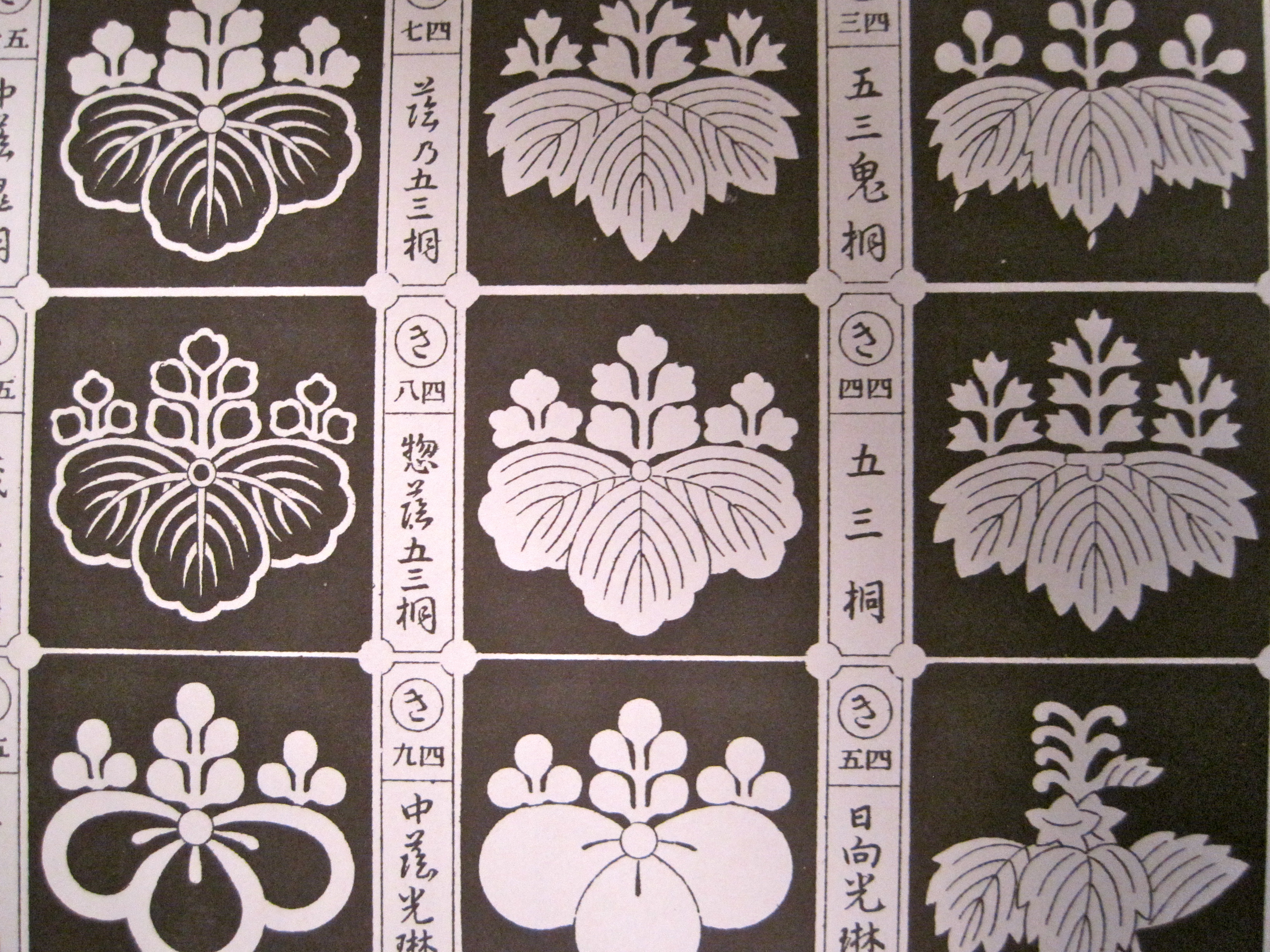
I found this kamon in a Japanese book of family crests compiled in 1913.
This furoshiki can be purchased at my shop: https://www.etsy.com/listing/154792021/antique-japanese-tsutsugaki-indigo?ref=shop_home_active
Antique hand spun katazome
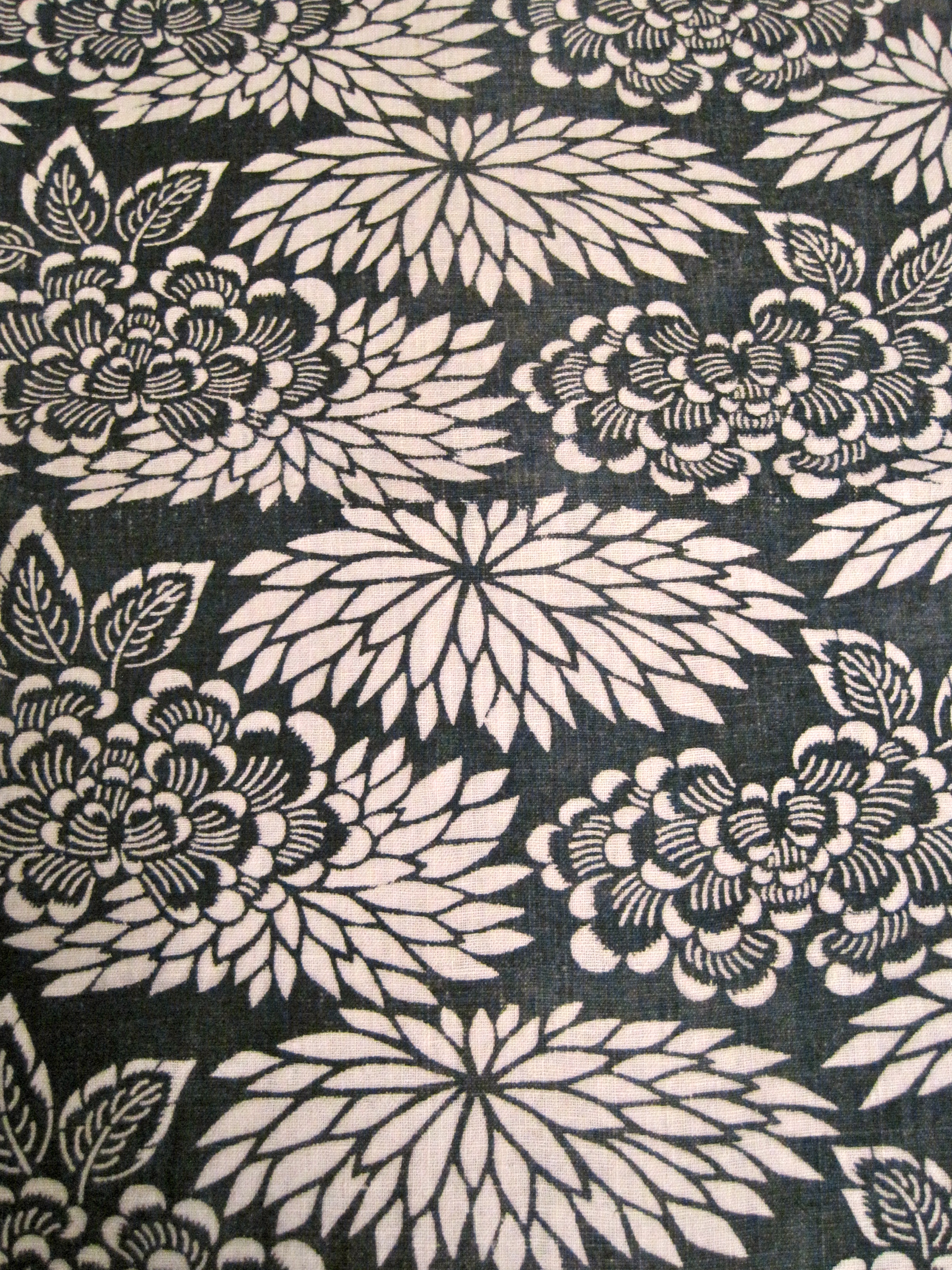

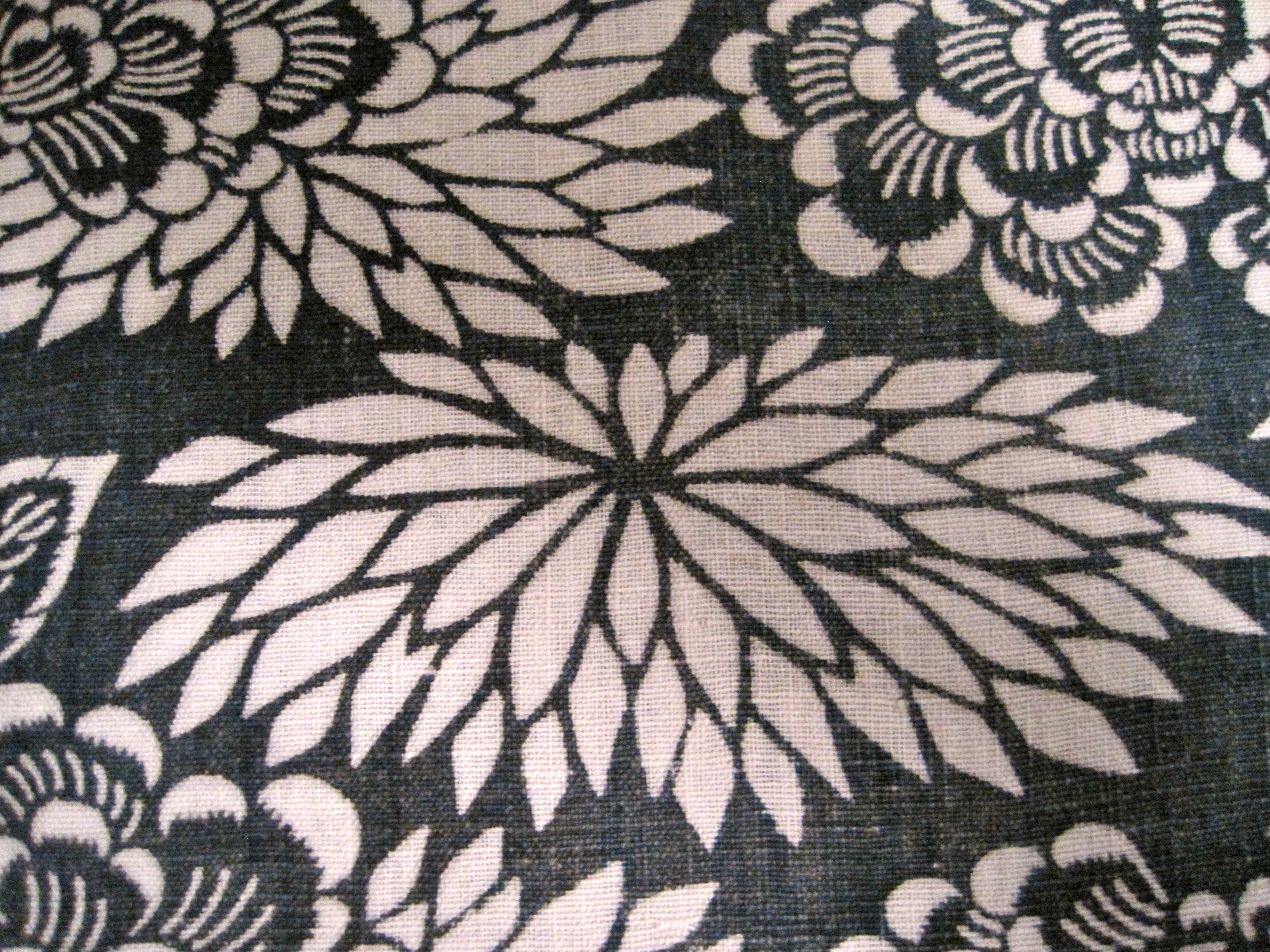

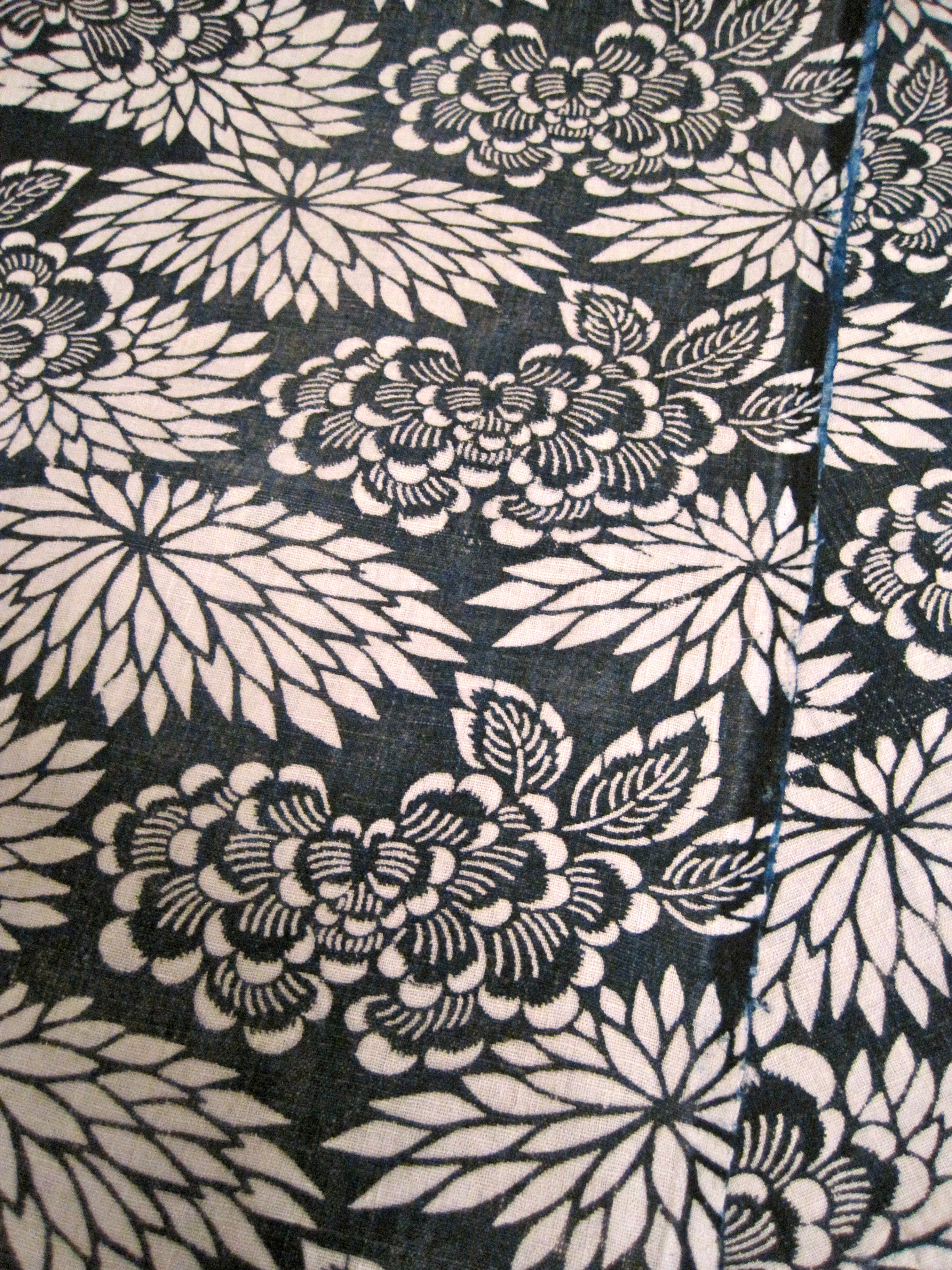
Hand spun katazome
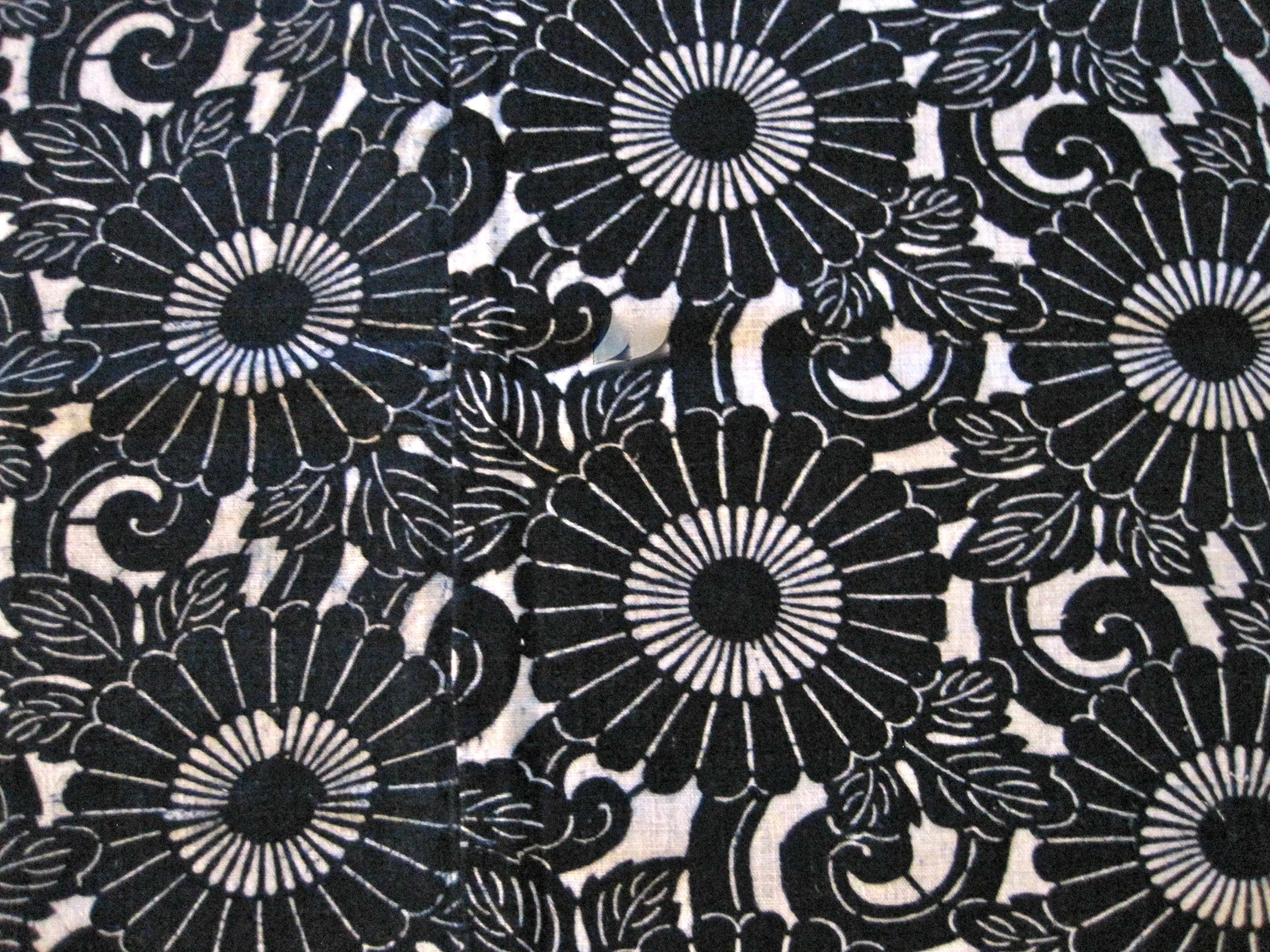
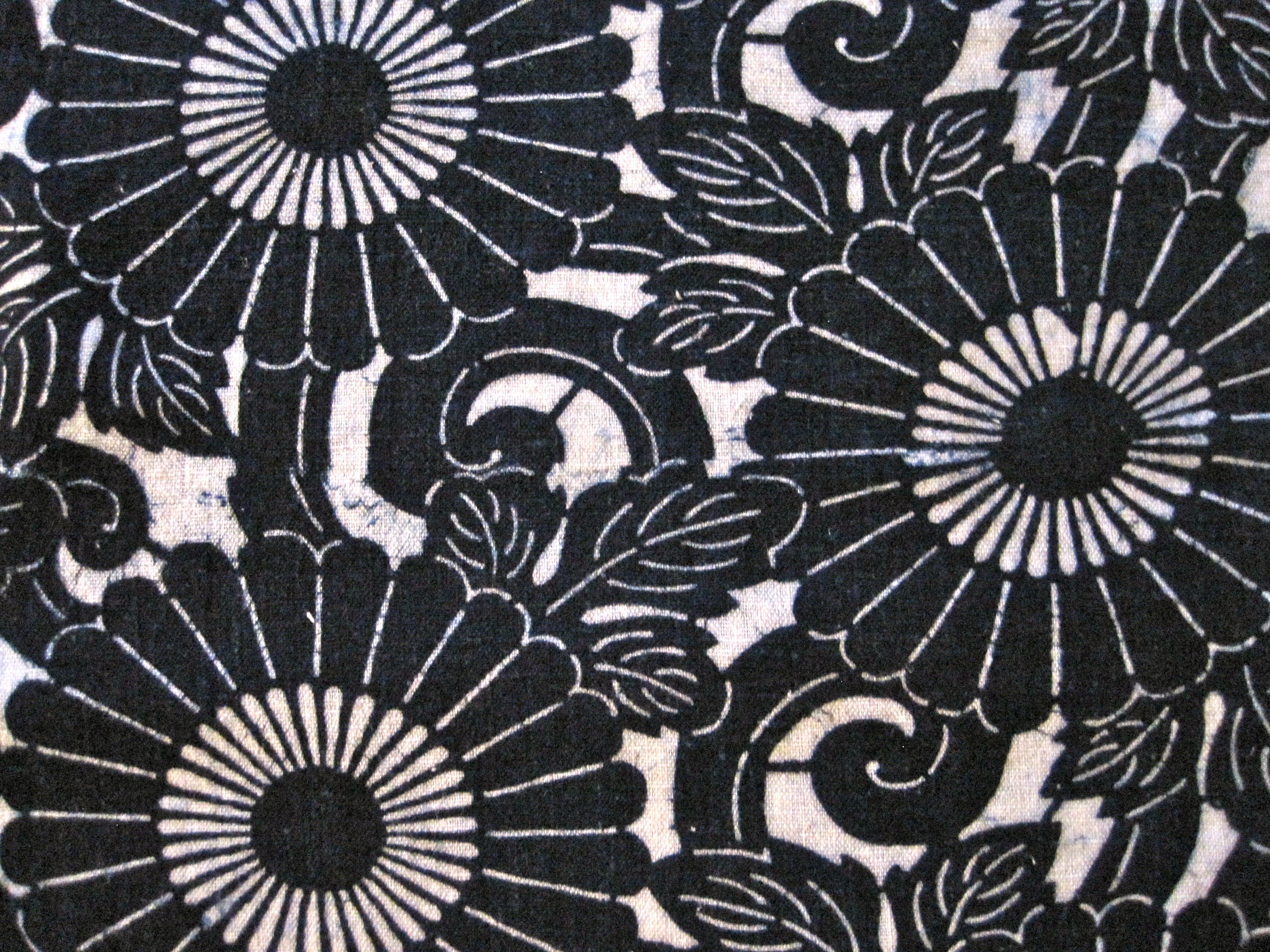
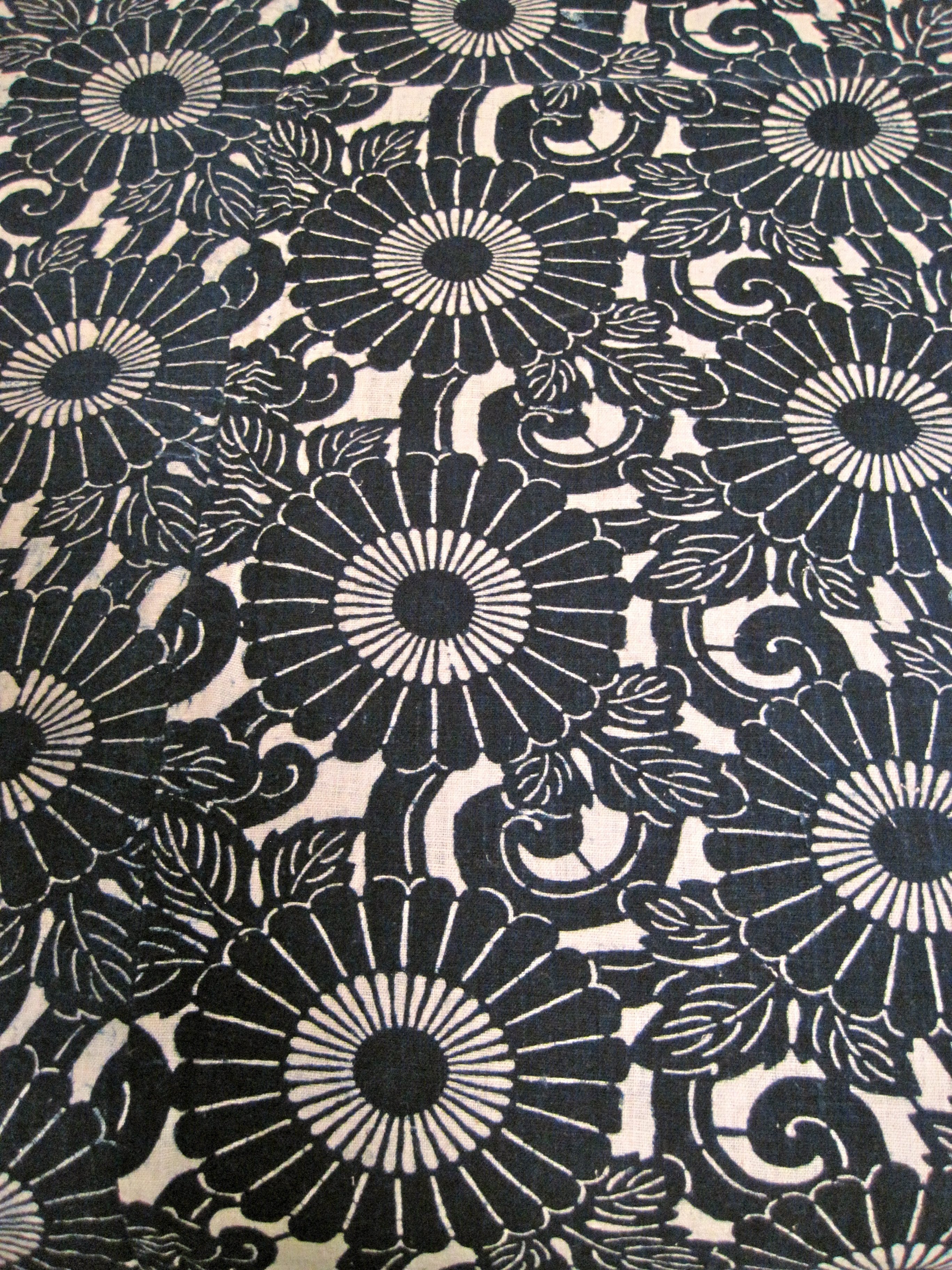
I like this early Meiji katazome for its bold design of chrysanthemum flowers and its beautiful hand spun texture. I also think its really amazing how strong the indigo remains after over 120 years. This design tells a lot about how katazome designs were created. You can clearly see the small connecting lines in the design that were made by small pieces of the original paper stencil. These small connecting lines helped hold the stencil together when an artisan was pushing rice paste through the stencil to deposit the resist. This second photo also shows the spot where the stencil was overlapped to create one continuous design.
Edo period katazome patches and sashiko


At first glance these patches seem ordinary. The first is a patch of small sashiko stitches and the second a normal enough blue patch with haphazard stitching holding the two pieces of fabric together. When you turn the piece over it reveals two beautiful patches made from beautiful Edo period katazome.
This patch is decorated with an amazing fern design often seen in late Edo and early Meiji tsutsugaki and katazome fabrics. 
The next patch has a beautiful double design of black leaves and branches on an indigo ground, as well as, resist dyed cherry or plum trees with stylized blossoms. I can’t even begin to understand the process of dying something like this.

I think these patches elevate this beautiful Edo period katazome, and I am in complete reverence of the masterful hands that created these fabrics so many years ago.
Antique furoshiki made from a nobori


This is a furoshiki, or “carrying cloth” made from three sections of an old Japanese banner. It was produced in the early to mid 20th century. and was dyed using fermented persimmon dye. The kanji was produced using a technique called tsutsugaki. This furoshiki is a great example of the Japanese idea of mottainai or “nothing wasted.” Notice the third section of the furoshiki where the kanji are upside down. 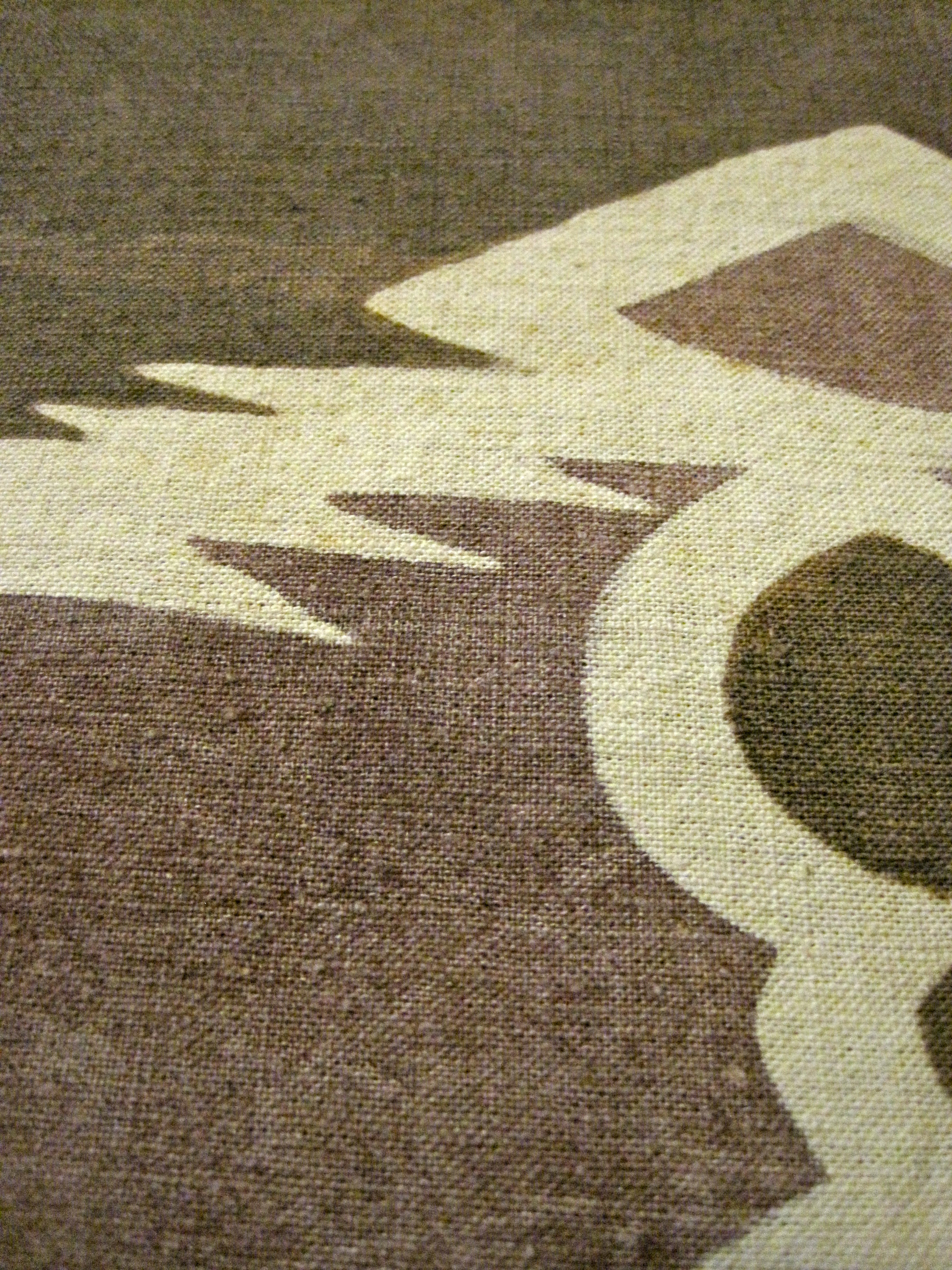


The darker portion above is where the banner would have been attached, via a fabric tab, to a pole that held it aloft. It remained dark while the rest of the banner was sun bleached. 
Early Meiji katazome

This early Meiji period katazome is made of indigo dyed cotton that has been hand spun and hand woven. The fabric is thick and has been worn soft by years of use. This piece was probably the top of a futonji and has been pieced together from 15 small pieces of the same fabric. It has also been mended with several large patches. 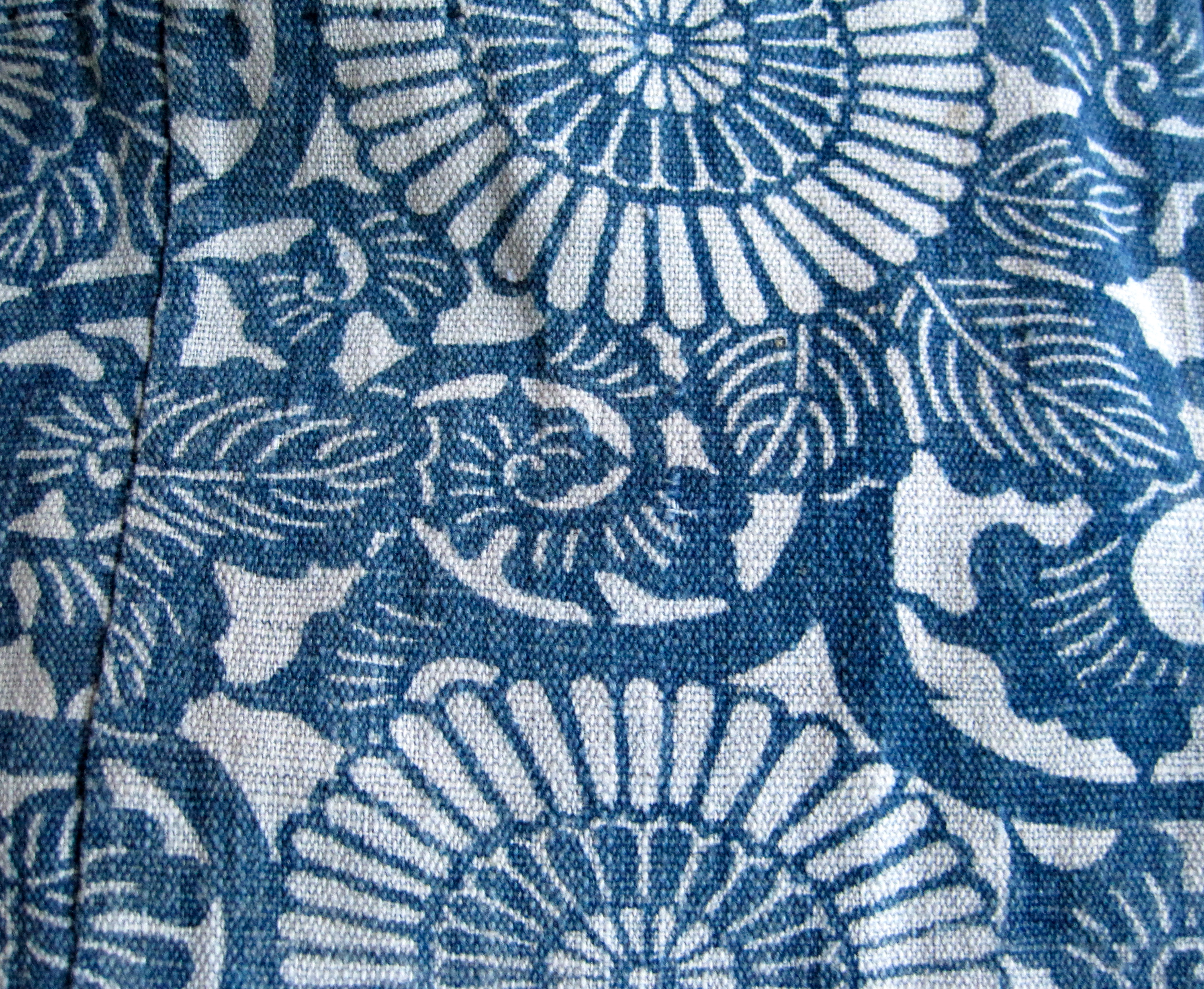
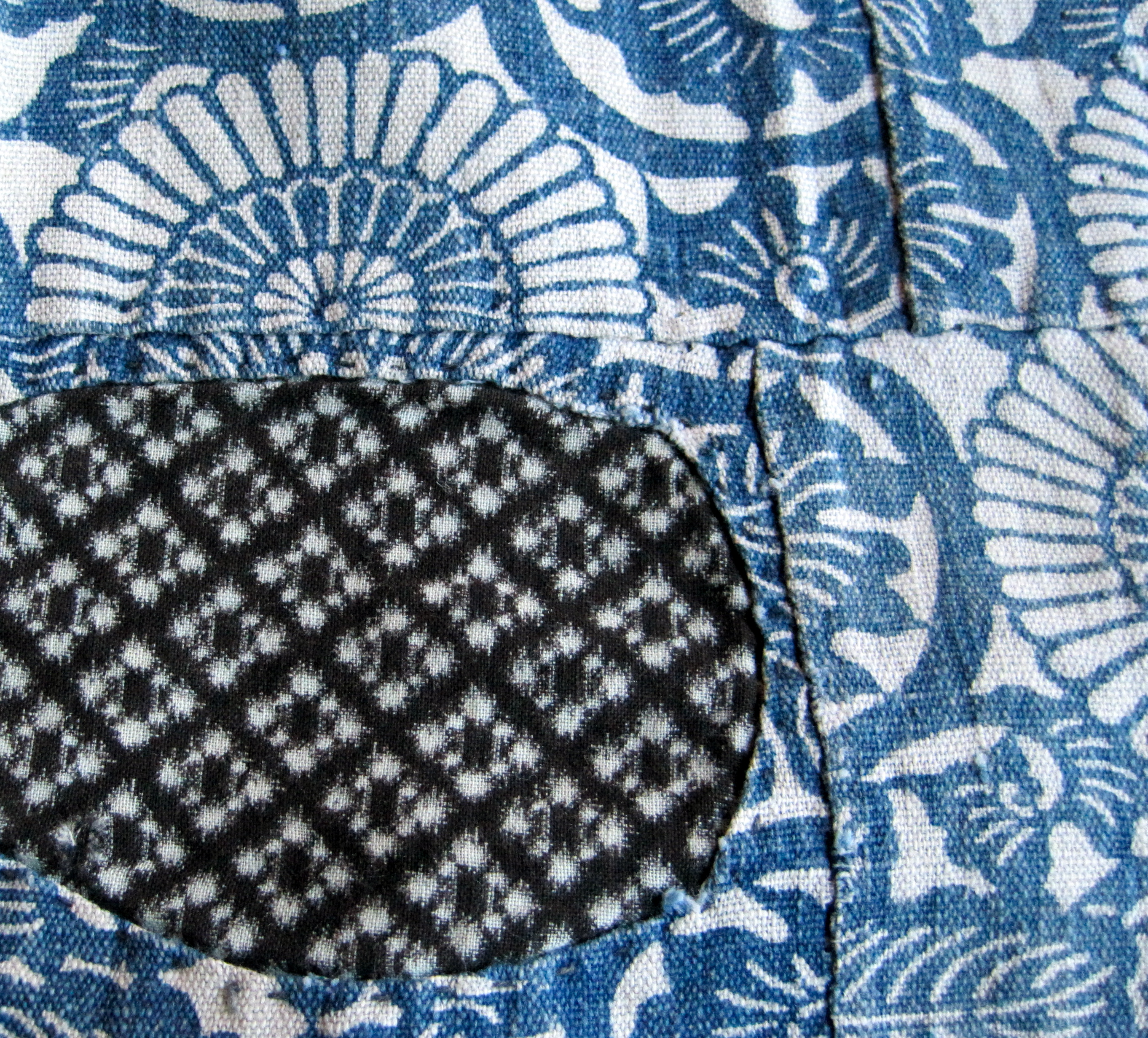


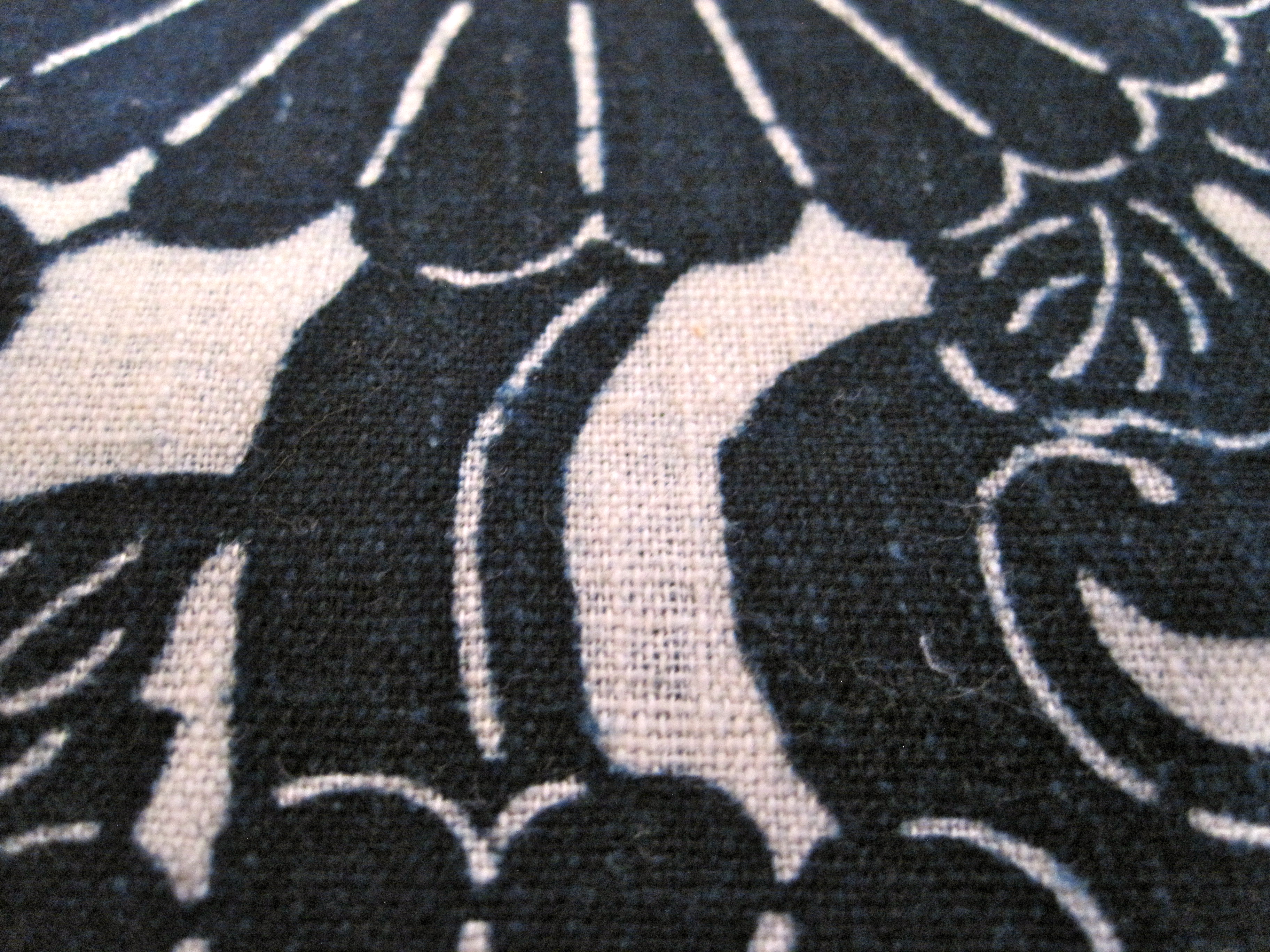
This last photo shows the irregular hand spun threads that produce a fabric with such amazing weight and texture.
 Nathan Somers Textiles