Tag Archives: momen

Zanshiori

Image

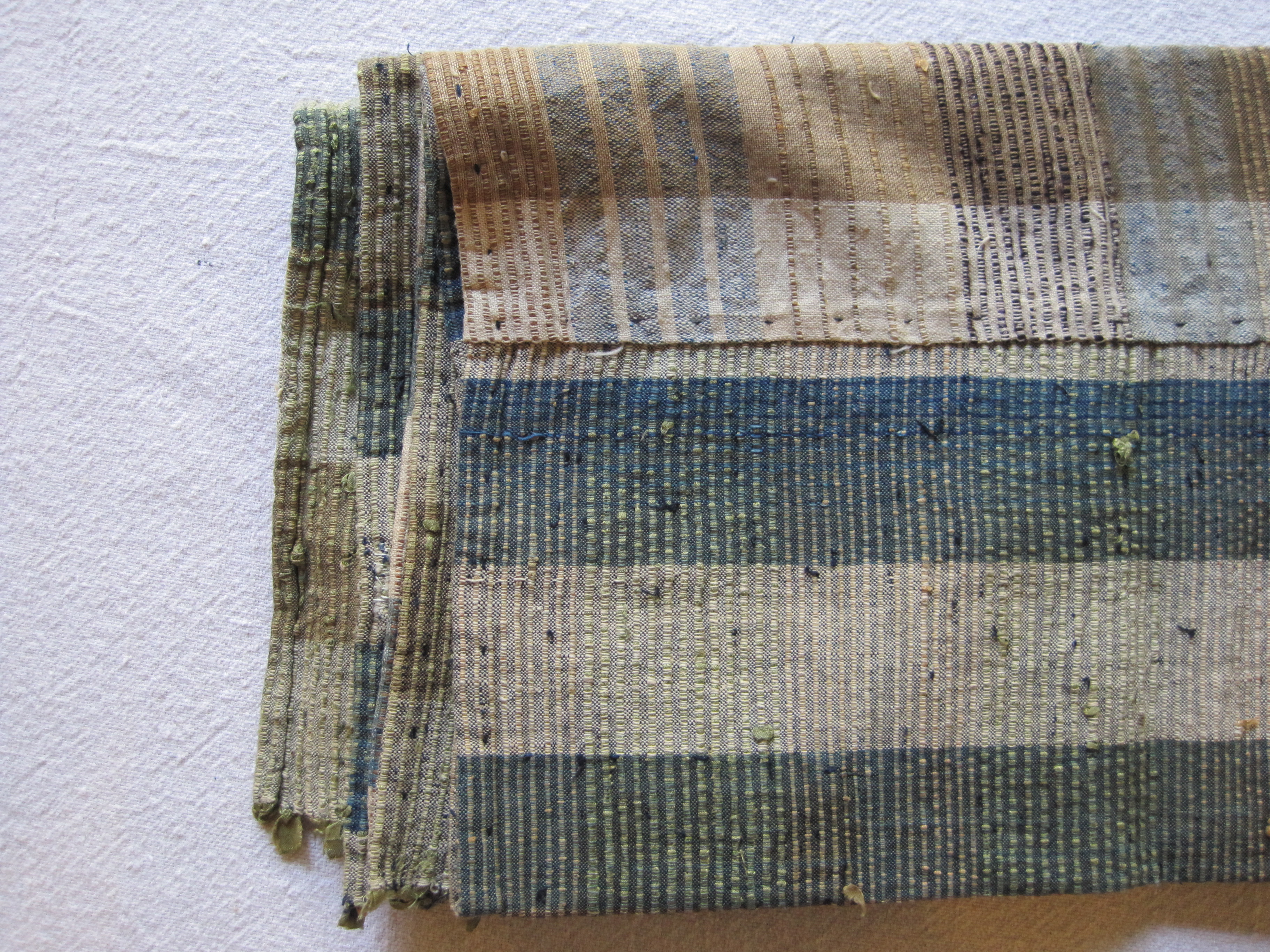
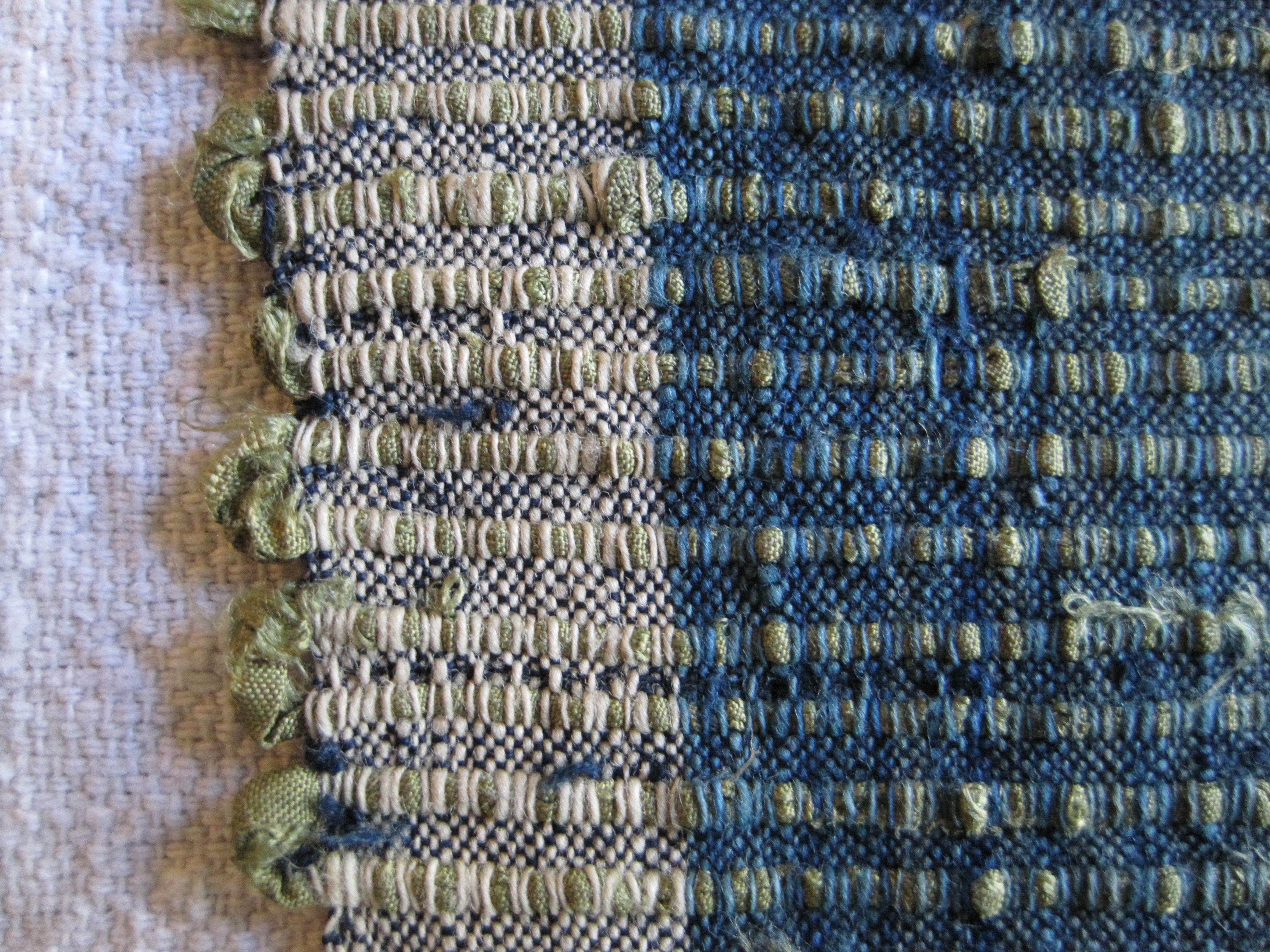
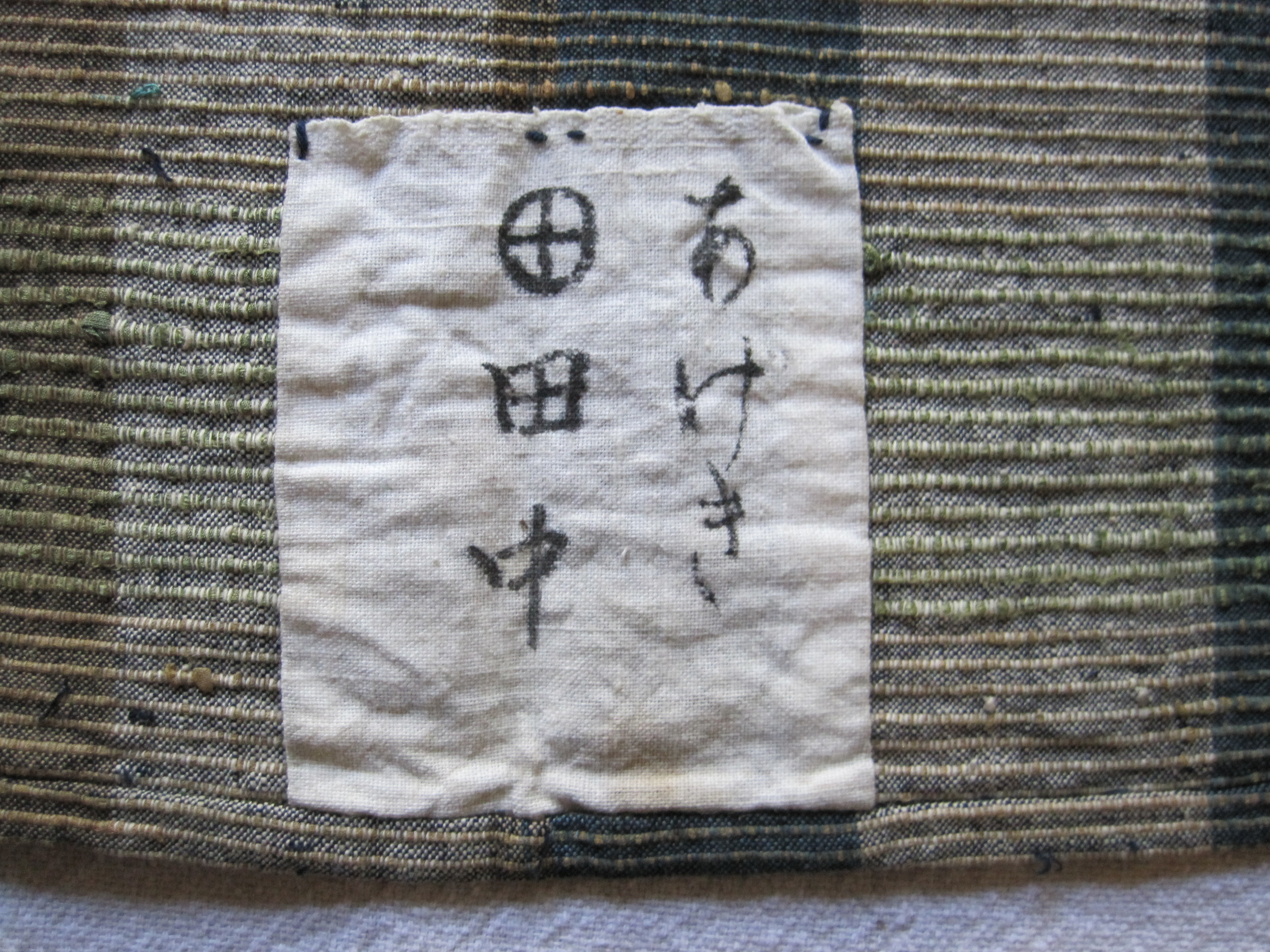
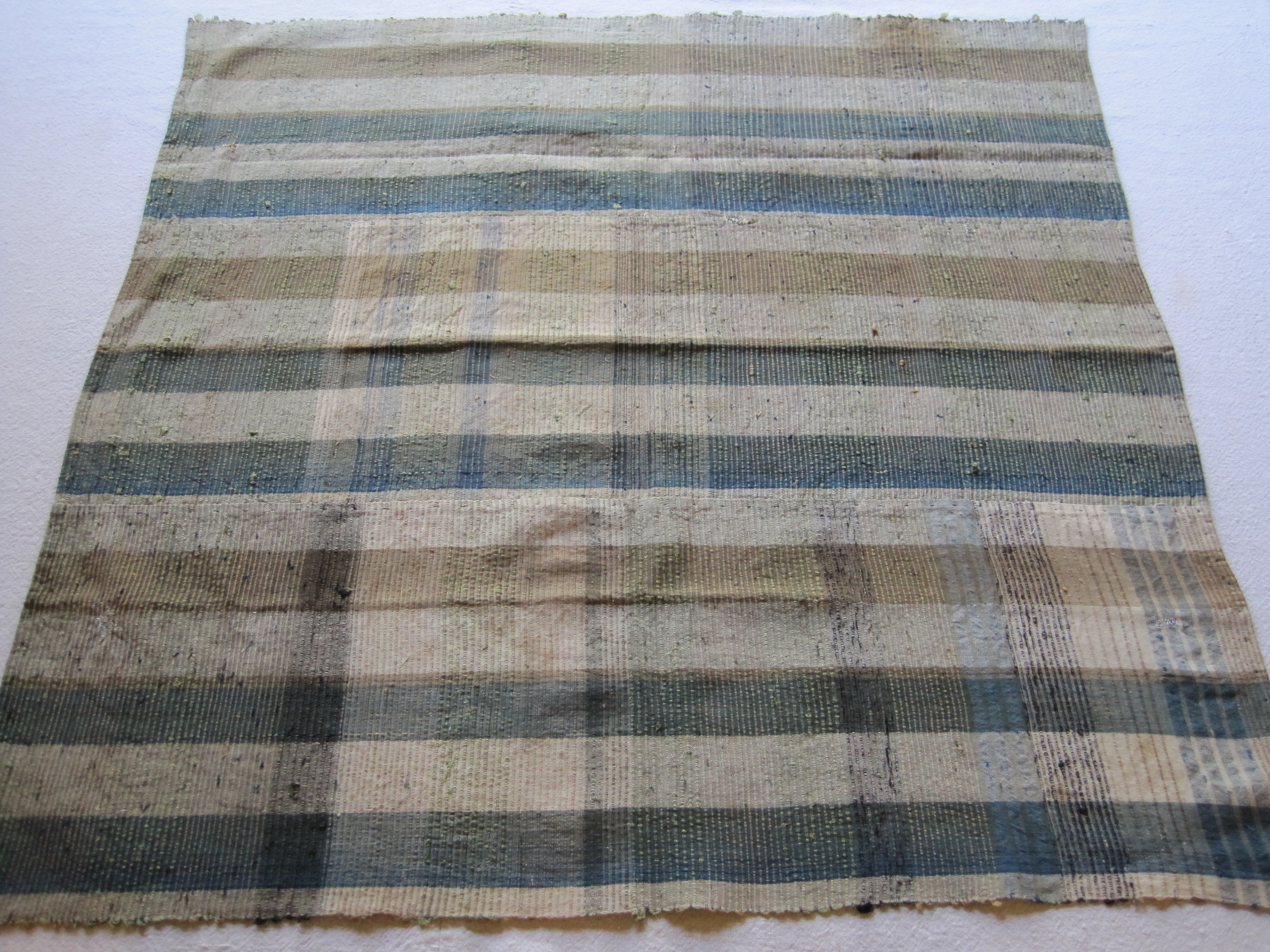
Here is some Zanshi or “left over thread” fabric I recently found. Zanshi was traditionally woven at the end of a bolt of kimono fabric. Once the kimono length had been woven the weaver would use up left over threads and bits and pieces left at the ends of bobbins to fill up the end length of warp. The resulting fabric was used for domestic purposes while the kimono bolt was more than likely sold. Zanshi was used most often for futon covers or work clothing. Notice the variation in pattern due to the different colors of left over threads.

Image

Image

Image

In these last two photos you can see the numerous knots used to bind the left over threads.

Image

Tsutsugaki furoshiki

IMG_1676

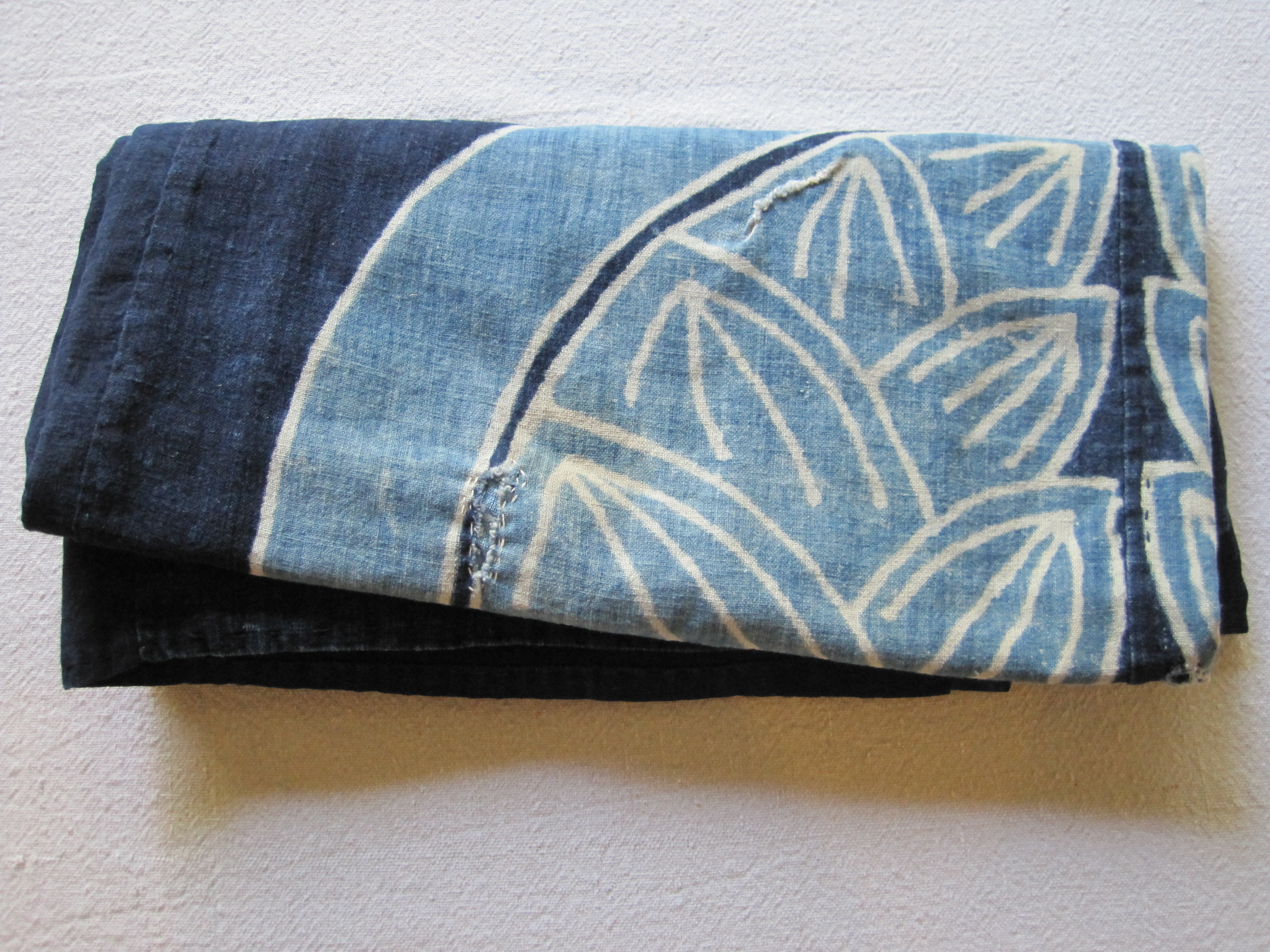
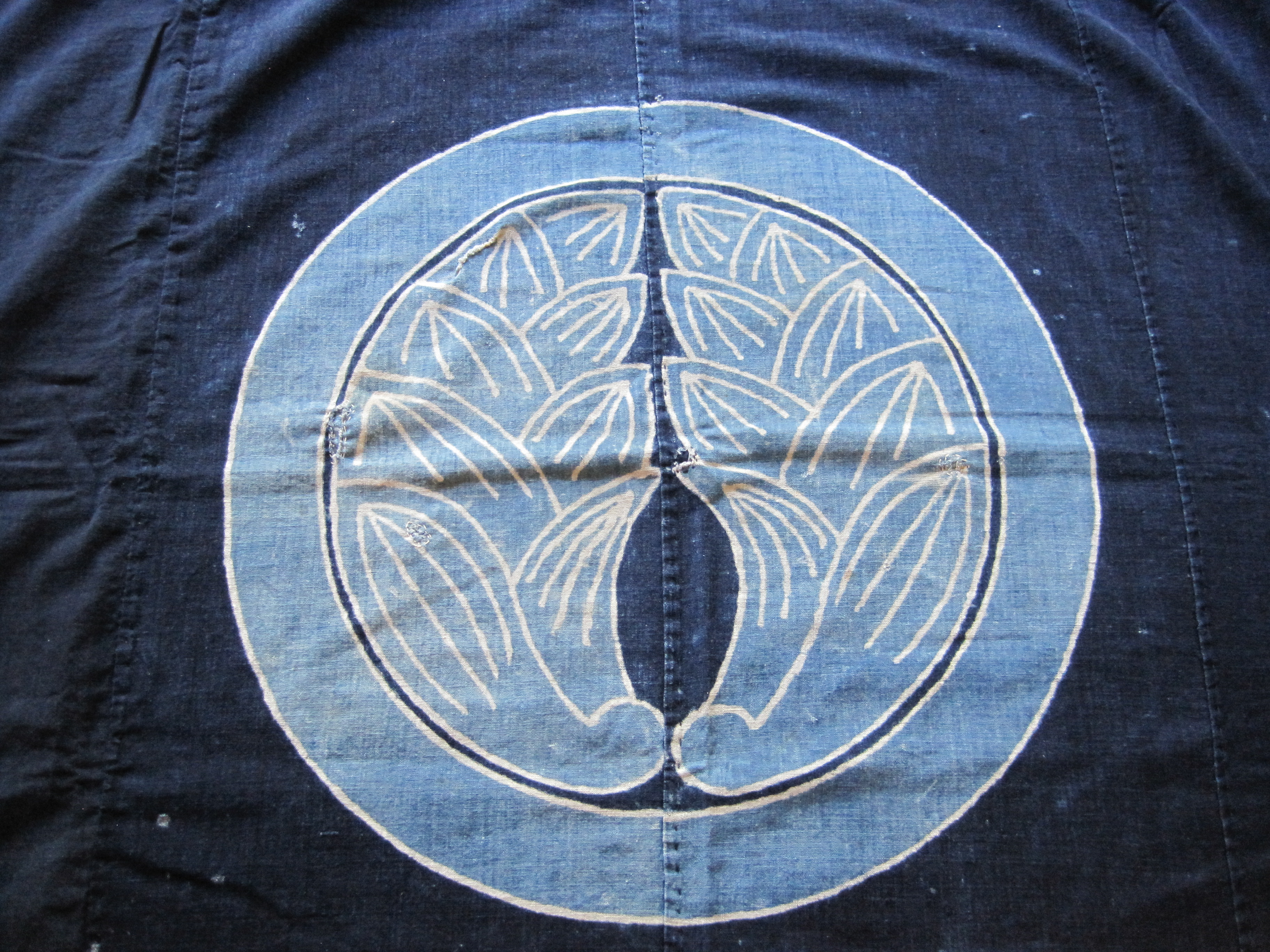
This furoshiki or “carrying cloth” was made from rustic hand spun cotton. The design of a ginger flower kamon against a deep indigo background was achieved through the process of tsutsugaki. Rice paste was pushed through a small metal tip affixed to a paper bag. After the design had been executed the fabric was dyed and then washed to reveal the outline of the ginger flower kamon. rice paste would have then been applied again to the areas that are now white before drying for a second time.

The deep indigo color of the background could have taken, as many as, 20 dips into the indigo dye vat to achieve, while the light blue of the kamon more than likely only took a few. This attests to the great skill of old Japans rural dyers.

IMG_1677IMG_1679

This furoshiki also has some beautiful repairs. there are several mended holes within the kamon itself, but one of the most beautiful is located at the center bottom of the furoshiki. This indigo patch has been applied with indigo dyed thread. I love the unintended texture of this patch.

IMG_1681

Nothing Wasted

IMG_1764

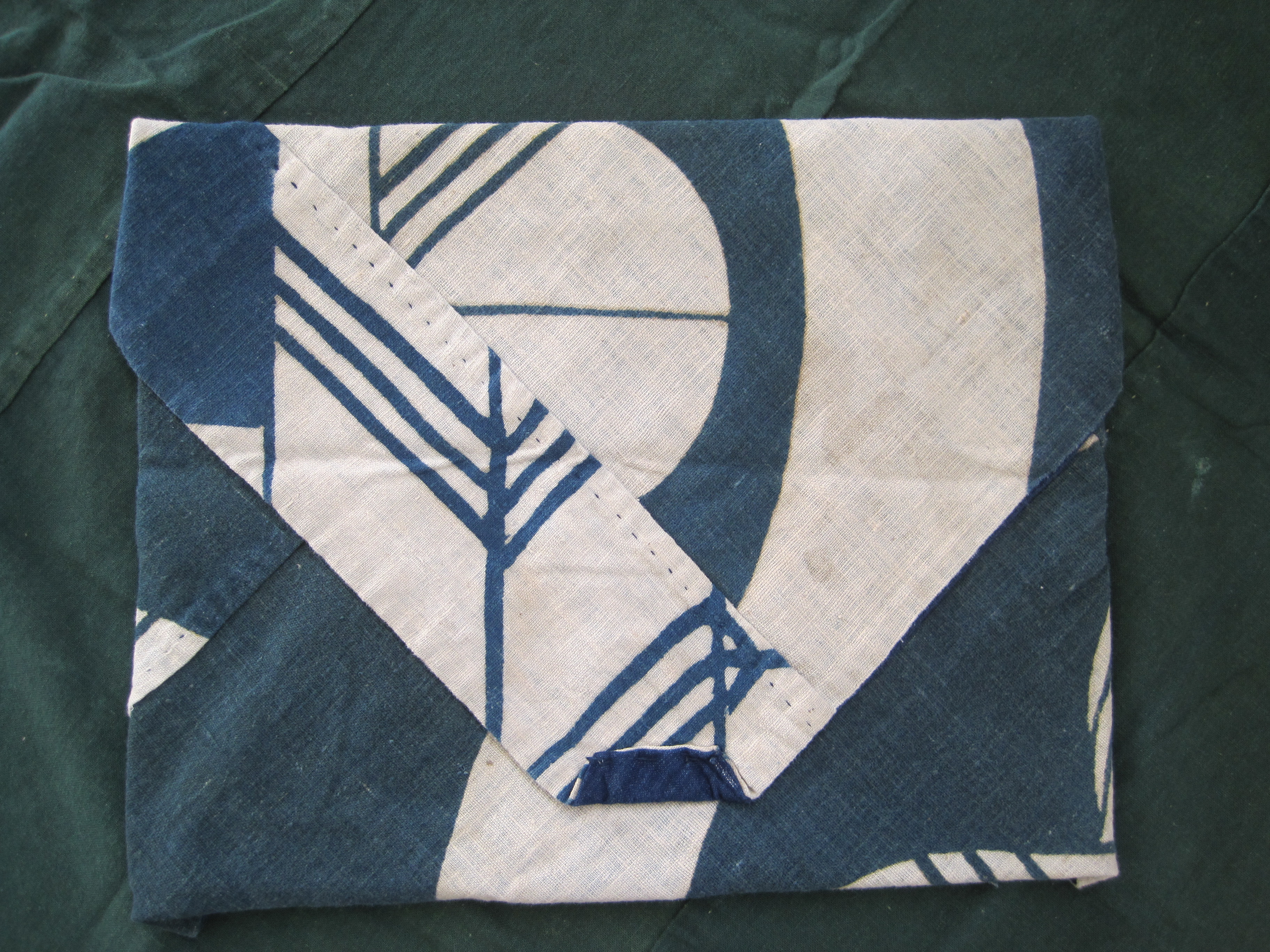
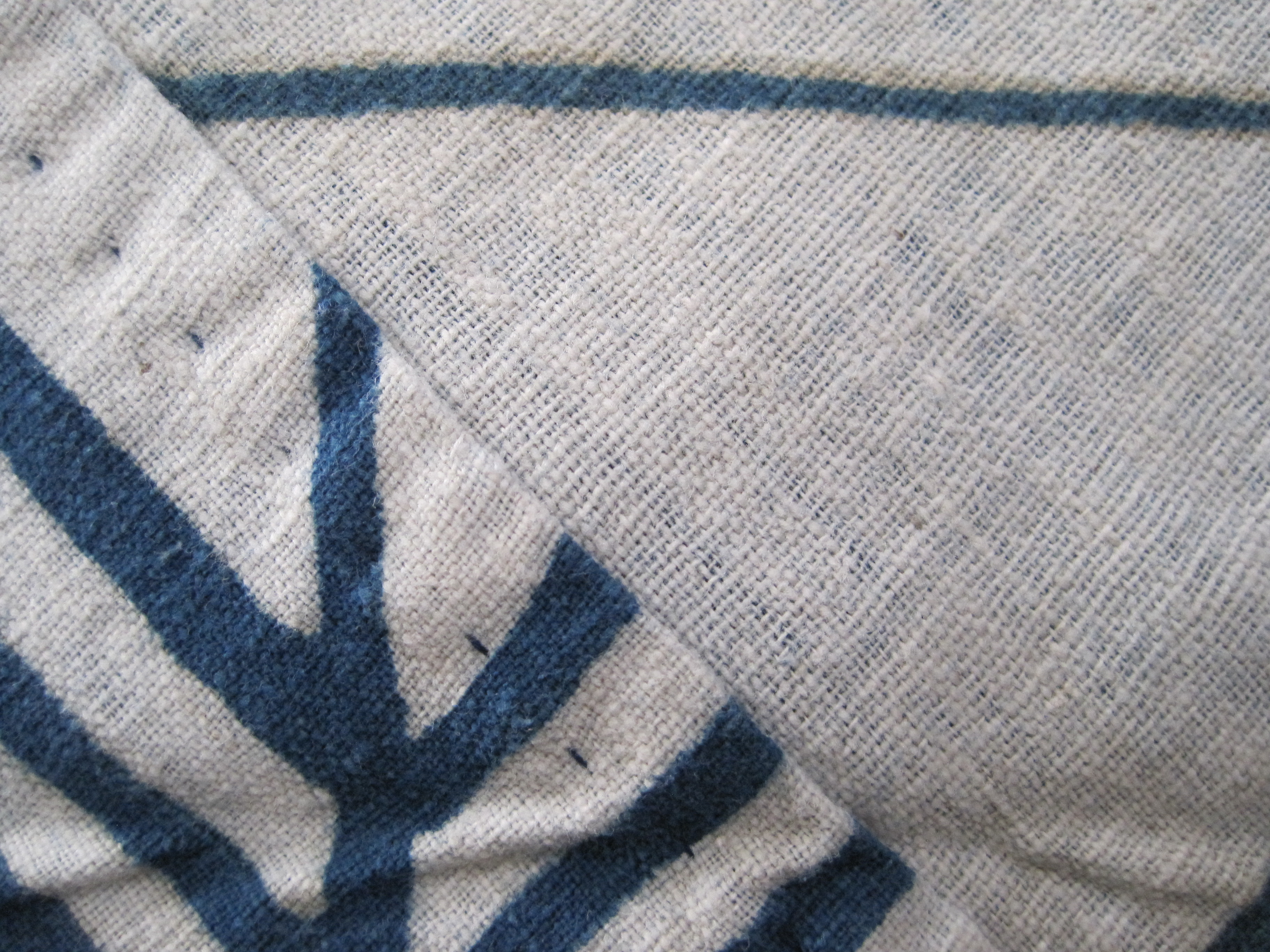
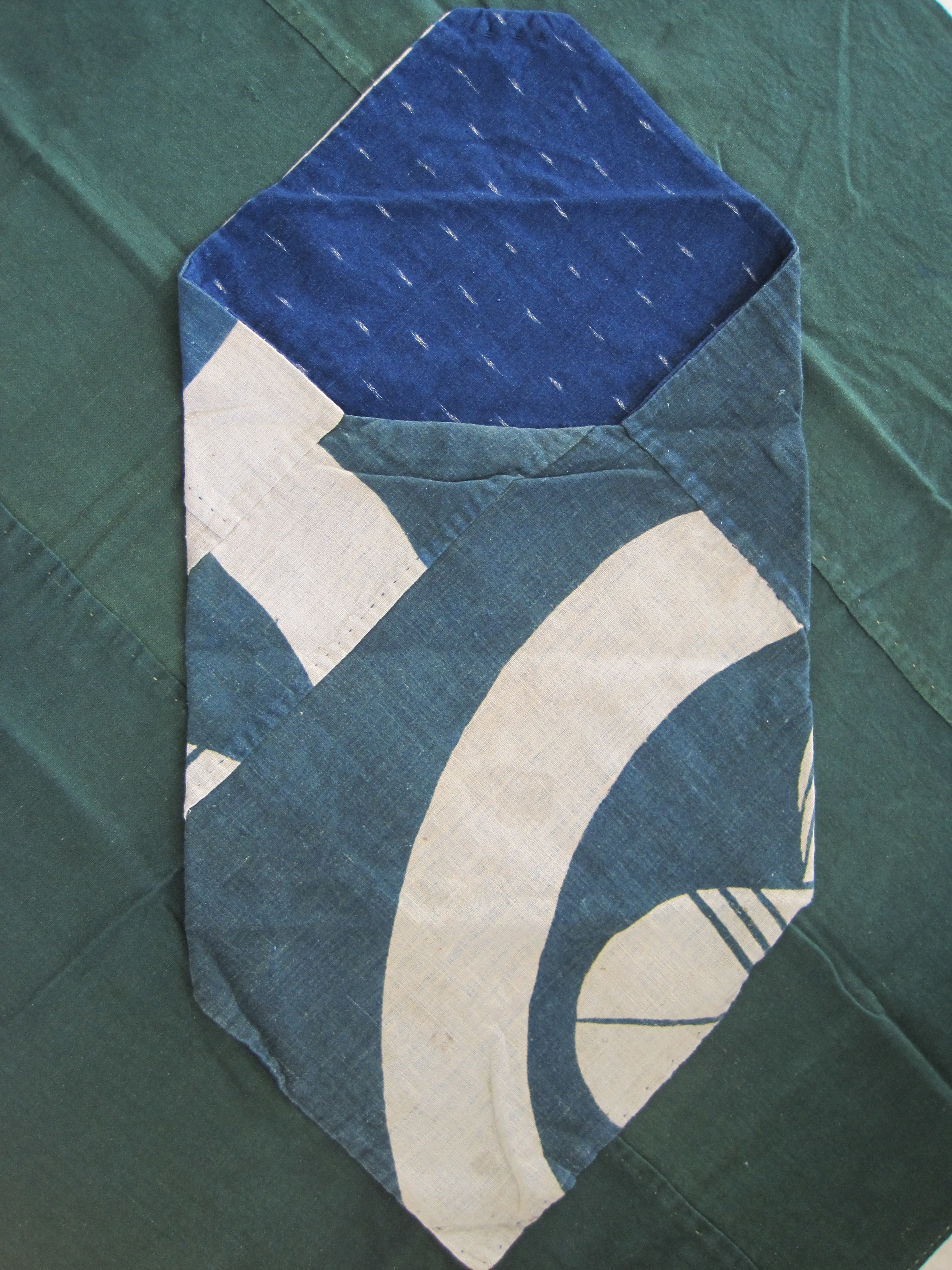
This small tsunobukuro or “horn bag” has been made from leftover fabrics. The outer over dyed indigo green fabric once displayed a family crest of crossed feathers. It was dyed using a process called tsutsugaki. The green color was achieved by being dyed with indigo first and then being over dyed with a yellow dye to create the beautiful blue green background color. The inner fabric is a beautiful deep indigo kusari or “ikat”. Both fabrics are hand spun and hand woven cotton. The outer fabric was more than likely a furoshiki or banner before it was reworked into this bag.IMG_1763

IMG_1765IMG_1762
This bag was more than likely used for caring a lunch box. I love the pattern produced by the reuse of the outer fabric. This bag represents the Japanese value of mottainai or “nothing wasted.” This item can be purchased at:   https://www.etsy.com/listing/115393181/antique-japanese-indigogreen-boro-cotton?ref=shop_home_feat

Indigo green furoshiki

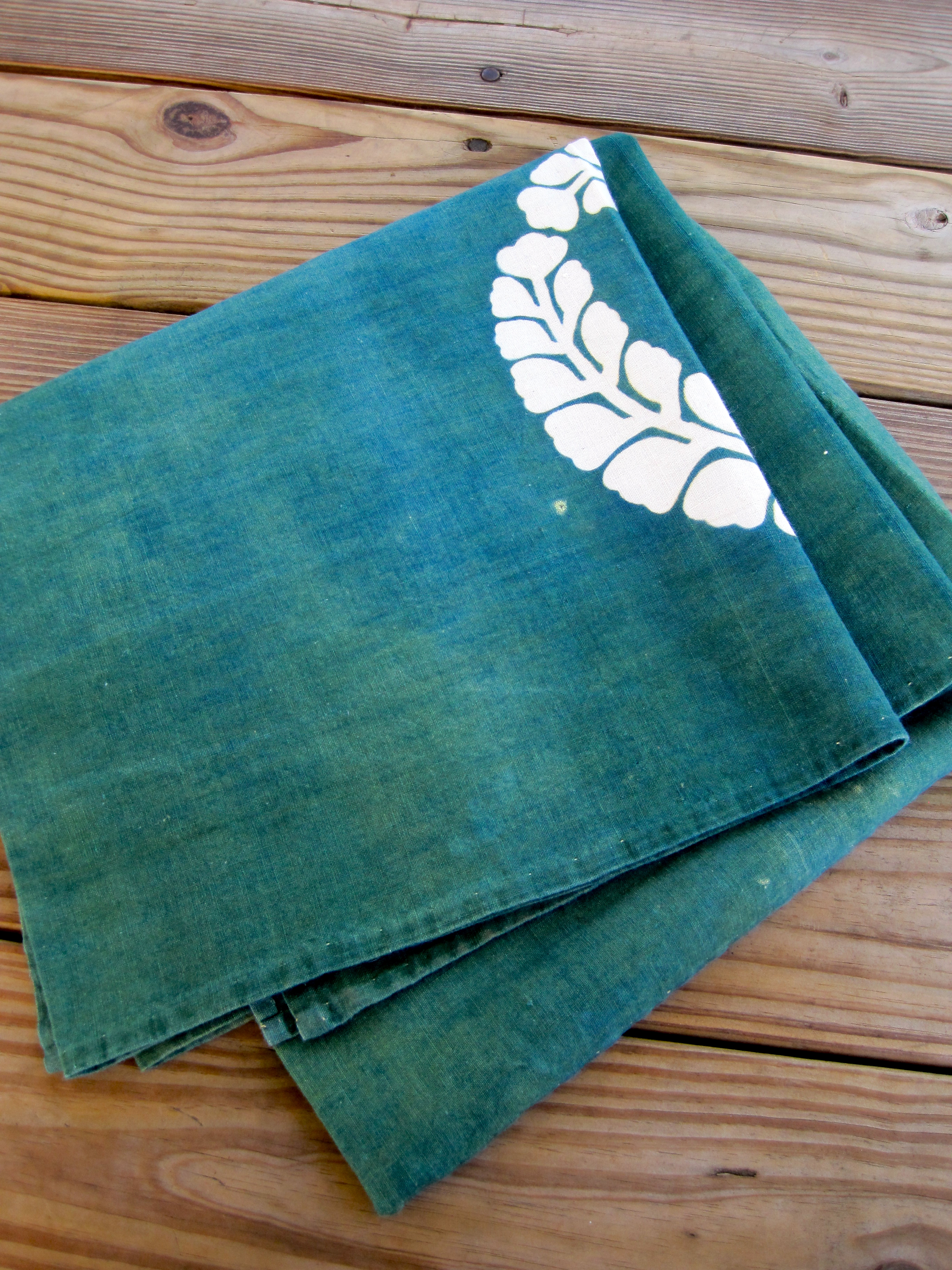
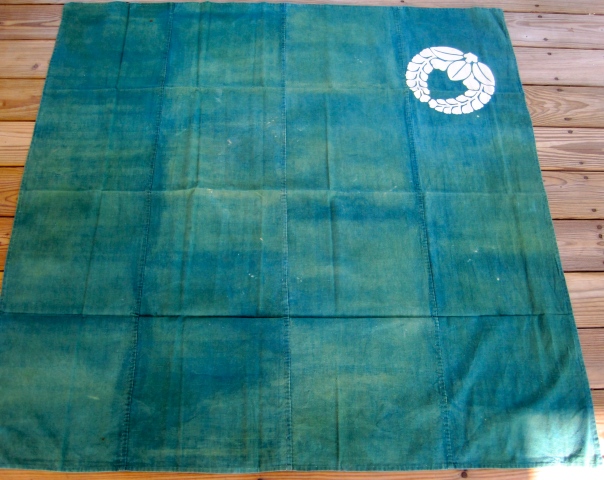
IMG_2027This green hand spun and hand woven furoshiki or carrying cloth was dyed with indigo and then over dyed with a yellow dye to produce a deep green color. Time and use have given this furoshiki a beautiful gradation of colors and a random ware pattern.IMG_2025

The hand spun cotton has a rustic feel. IMG_2026

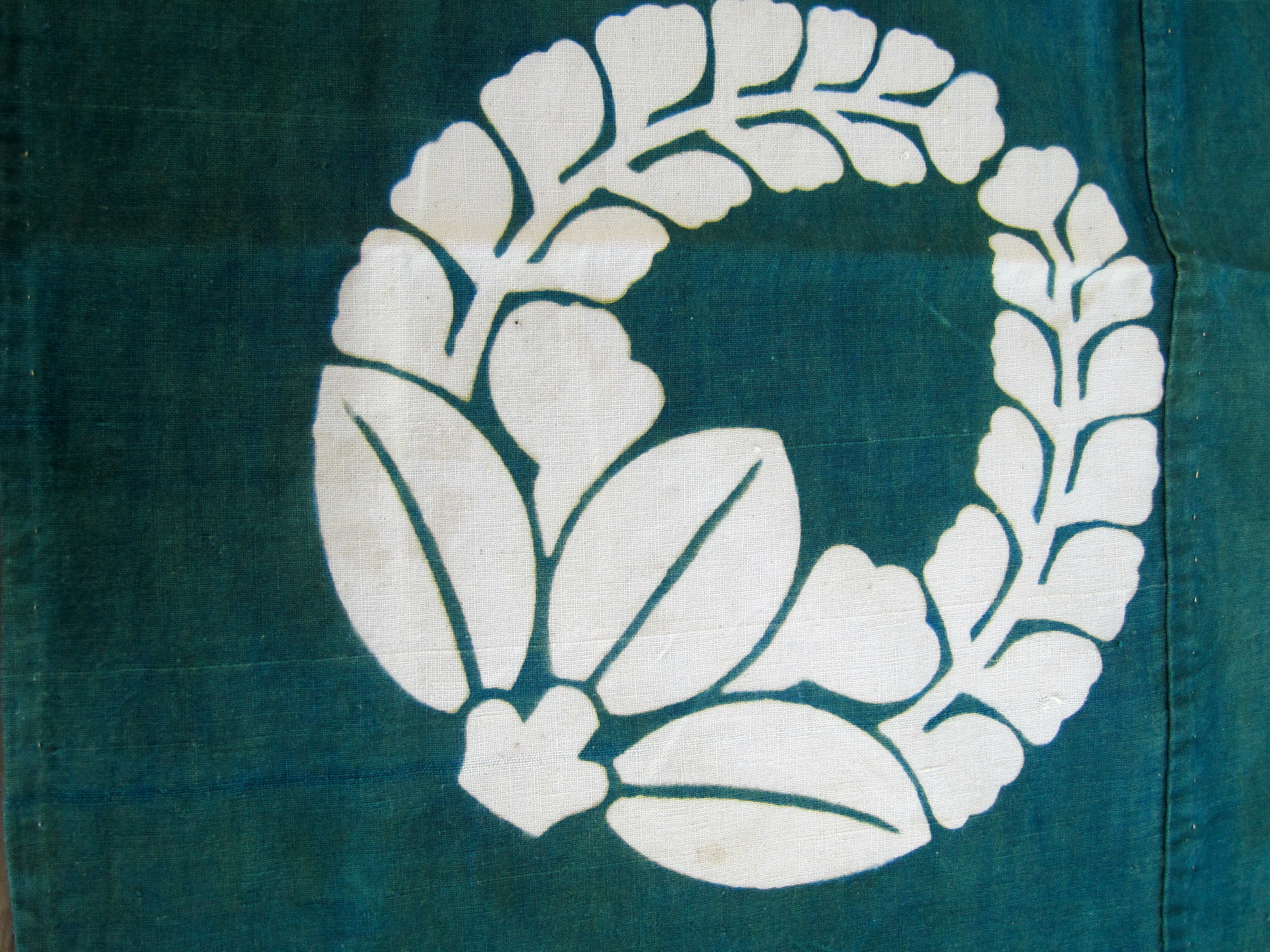
A wisteria kamon or crest has been applied to the furoshiki using a stencil. Rice paste was pushed through a stencil and allowed to dry before the fabric was dyed. After dying was completed the rice paste was washed off to reveal the design. IMG_2024This piece probably dates to the first half of the 20th century.